
Wellness Protocol
Everyday support. One simple liquid.
SHOP WELLNESS
Everyday support. One simple liquid.
SHOP WELLNESS
Cellular energy + healthy aging support.
SHOP PROTOCOL
Daily support for skin, coat, eyes + gut.
SHOP ESSENTIALS
Weight, metabolism, heart + vitality support.
EXPLORE CAT PROTOCOL
The walk ends sooner. Getting up takes longer. Before those changes become the new normal, look at the energy behind them.

Your dog stops where he used to keep going. You shorten the walk, match his pace, and make a little more room for rest.
At first, it feels like an adjustment. Then the shorter route becomes the usual one. The afternoon nap stretches into the evening. Getting up for a greeting takes another moment.
Because the same familiar face is still looking back at you, it is easy to make each change feel smaller than it is. But a dog’s everyday life can shrink one ordinary moment at a time.
Those moments have something in common: they ask his body for energy. That gives you a useful place to look beyond his birthday, and a reason to make daily care more deliberate now.

Pawprint Protocol makes cellular-energy support part of the meal you already serve: a daily liquid formula mixed into food. The familiar bowl becomes a practical place to begin.
A longer nap on its own may not catch your attention. A shorter walk on its own can seem easy to accommodate. The pattern becomes clearer when you look at what is changing across the same day.
Illustrative scenes of senior-dog care.
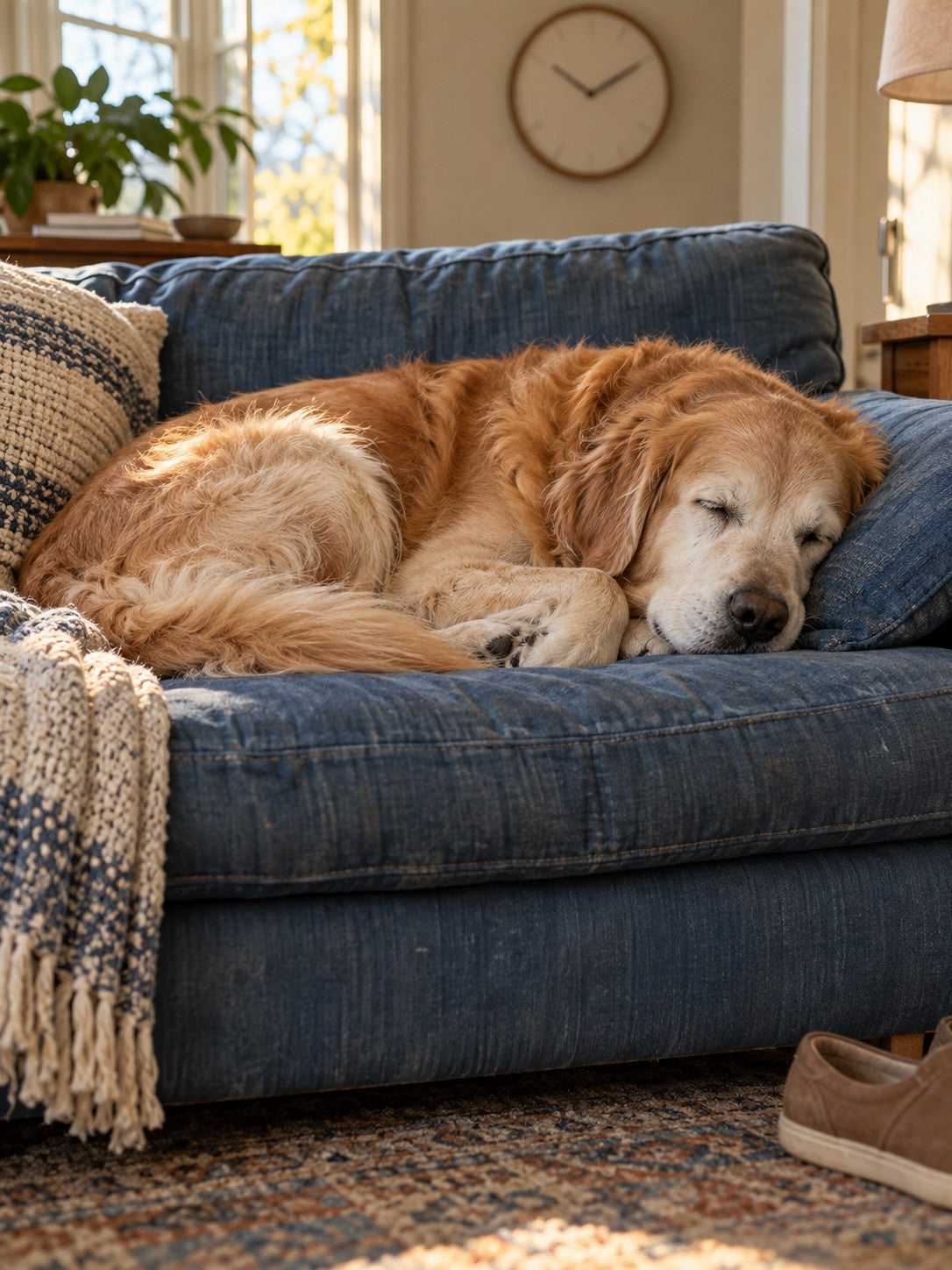
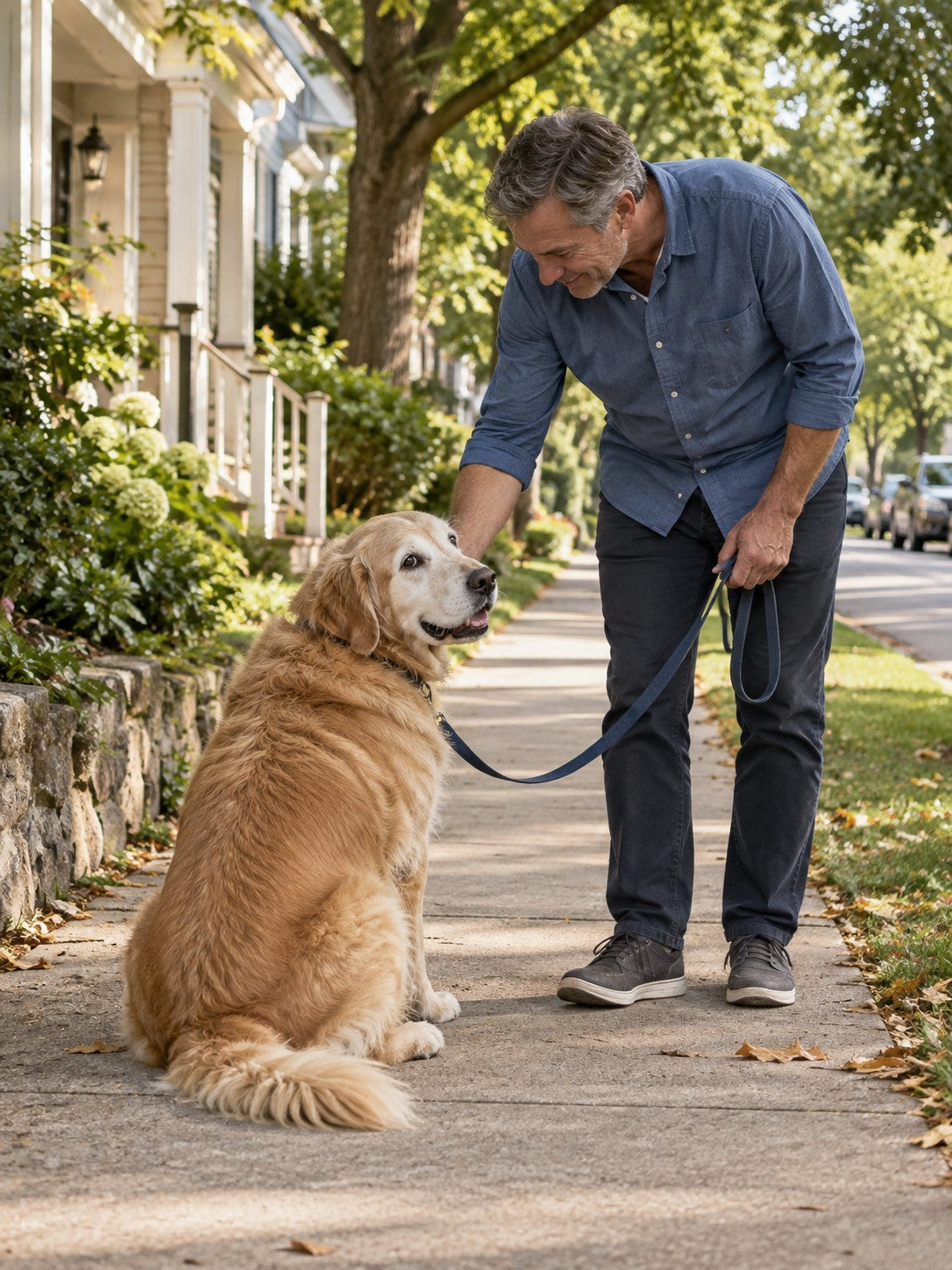
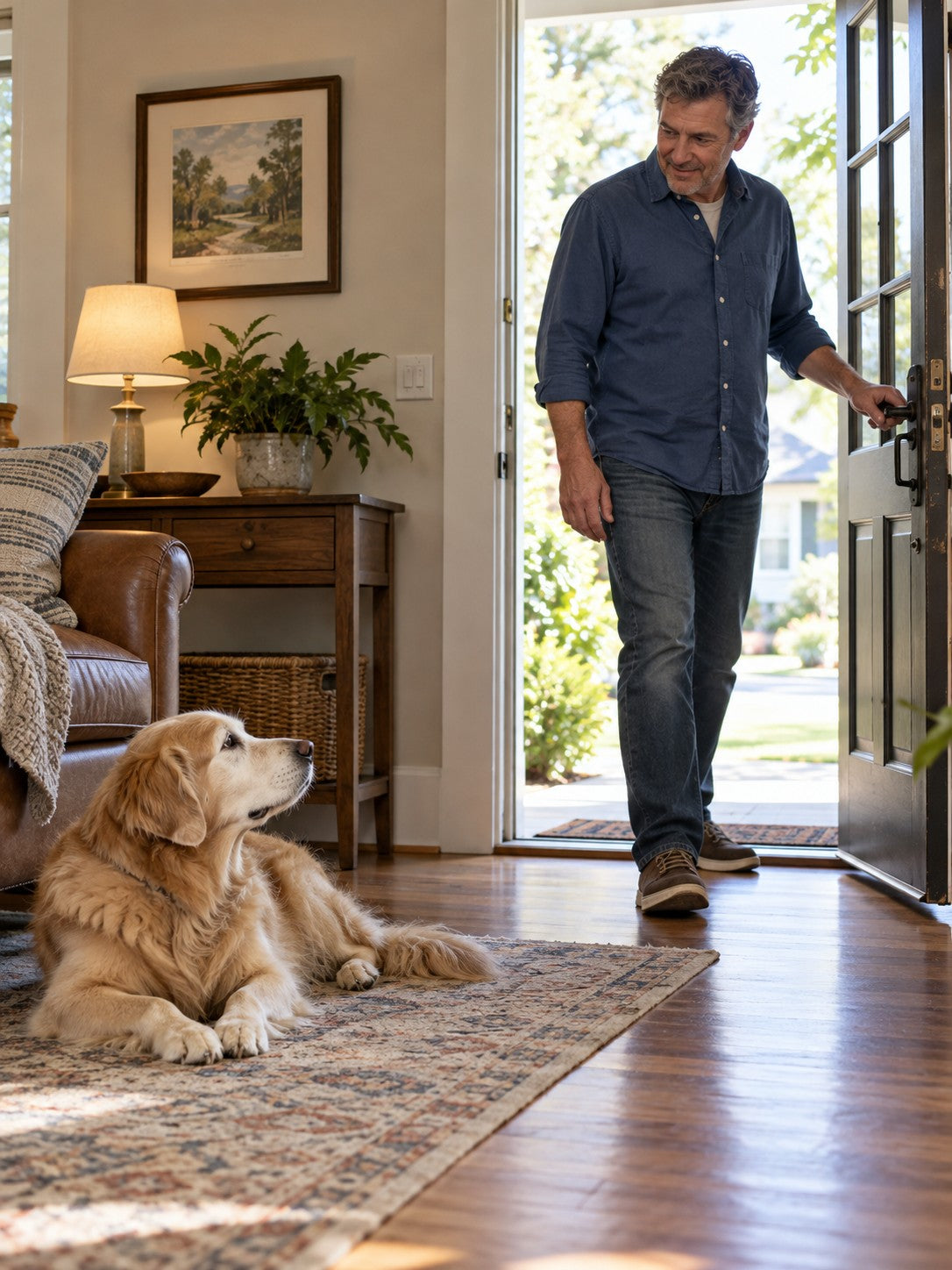
Dogs hide the quieter changes well. By the time you notice, they may already have been happening for a while. Compare him with his own familiar routine: the route he used to finish, the ease of his first steps, the way he joined you at home.
You know that baseline better than anyone. Use it to decide what deserves attention today.
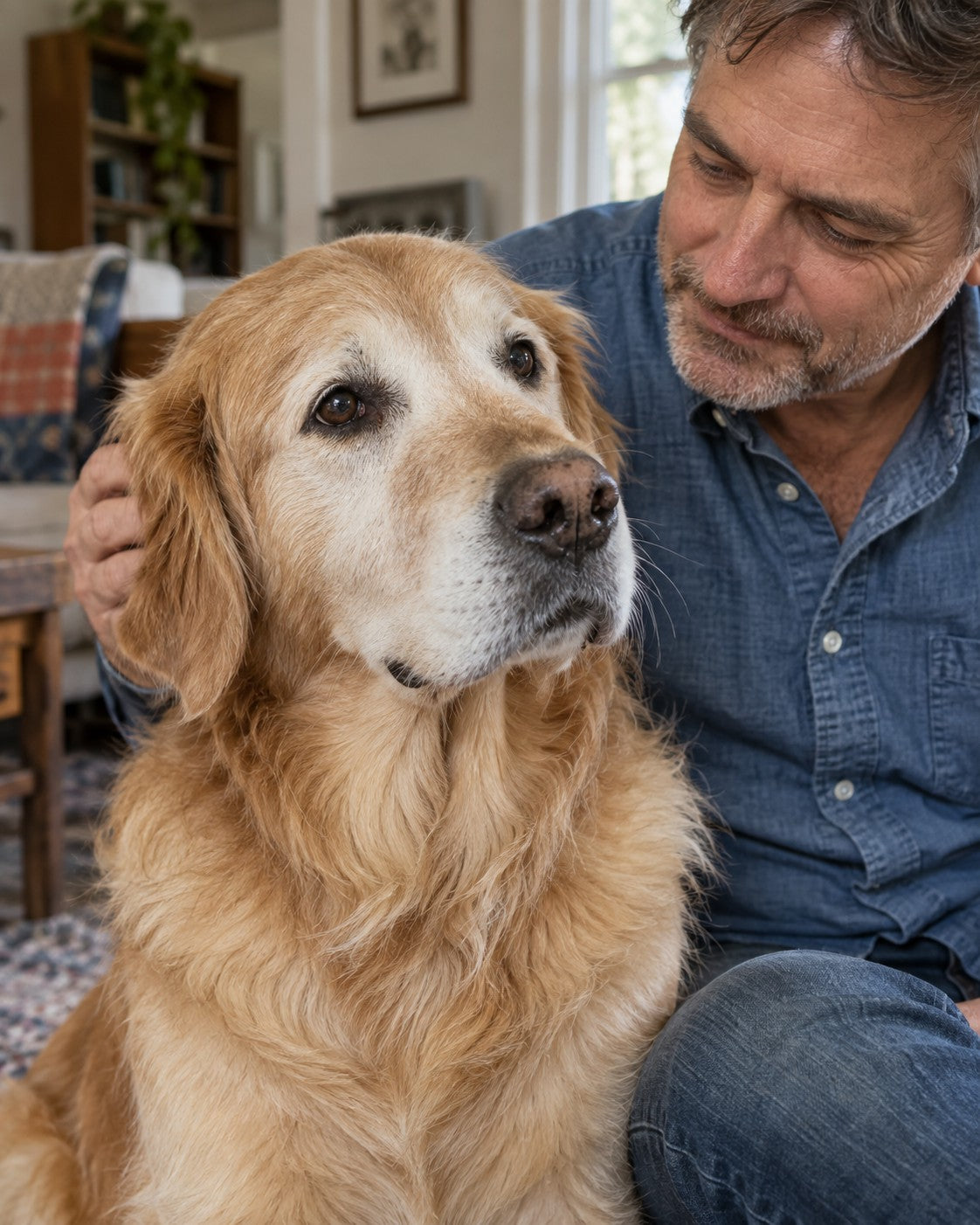
His place in the family has not changed. He still follows you with his eyes, settles near your feet, and knows when you are home. Familiarity can hide how much more effort the ordinary day now asks of him.
Age explains why you are paying attention. It does not tell you what to do next. The next step begins with the changes you can describe: a slower rise, a shorter route, or more time resting between activities.
You do not need a dramatic moment to take a quieter change seriously.
Bring those observations to a conversation about his care. They are more useful than a general impression that he is getting old, and they give daily support a clear purpose.
Standing up, walking beside you, and moving from room to room all depend on energy inside his cells. The visible change happens in the hallway or on the sidewalk. The processes that power those movements happen below the surface.
As dogs age, their cells make less energy. Muscles tire sooner. Recovery takes longer. That is why cellular energy matters to the ordinary moments you still want to share.
This perspective gives daily care a specific job: support the energy processes his body relies on, in a way you can repeat consistently.

NMN helps the body make NAD+ — a molecule cells use in energy processes.
CoQ10 also plays a role in cellular energy, including the energy processes muscles rely on.
Pawprint Protocol brings NMN, NAD+, resveratrol, and CoQ10 together in one liquid formula. You can make cellular-energy support part of his existing food routine, with the daily amount measured for his weight.
See Protocol optionsStart with three moments you already share: the first rise after a nap, the familiar walk, and the greeting when you come home. These are ordinary enough to notice repeatedly without asking your dog to perform for you.
Write down what you see. Did he pause sooner on the usual route? Did he take longer to settle after the walk? Was getting up different from his familiar pattern? A few concrete observations give your next care conversation something useful to work with.
Keep looking at the same moments as you build your routine. Caring for him becomes easier to follow when you know what you are paying attention to, and when daily support belongs to something you already do.
A familiar moment is a better starting point than a vague sense that he is slowing down.

A useful daily step needs a place in the real day. Dinner already has one. You prepare his food, put down the bowl, and make sure he has what he needs.
Protocol is a liquid mixed into the food he already loves. No new chew to persuade him to take, and no separate treat to leave behind. The support becomes part of a familiar ritual.
Keep the bottle where you prepare his food, and measure the amount for your dog’s weight. Consistency is easier when you know exactly when and how the step happens.
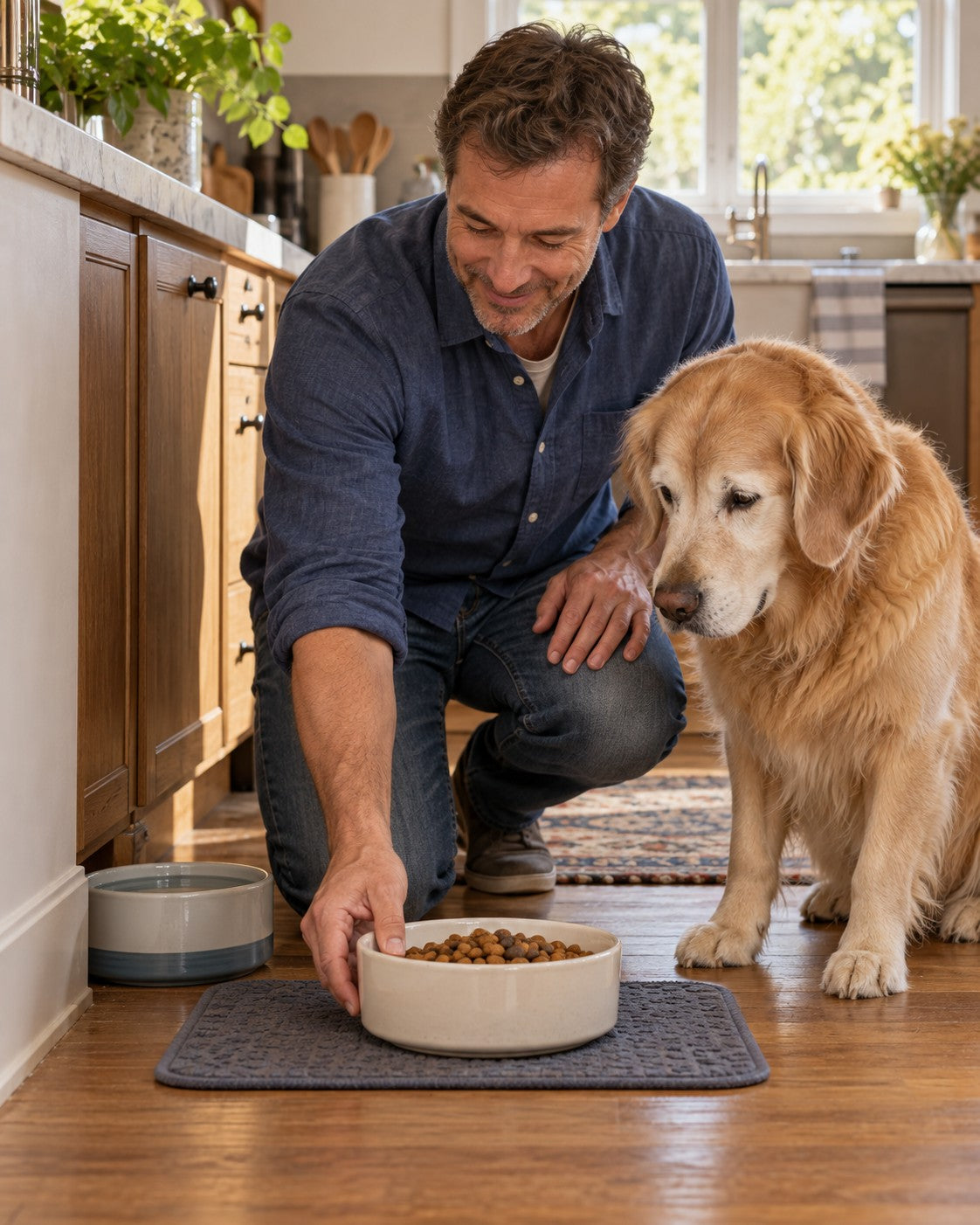
When your dog has been the steady presence in your home for years, it is easy to keep adjusting around him. A shorter walk. More time to get up. Another quiet afternoon.
You can turn those observations into action: describe the changes to your vet, pay attention to the moments that matter, and make cellular-energy support a repeatable part of his care.
The reason is close to home. The company in the kitchen. The greeting at the door. The walk you still take together. Give those everyday moments a place in the decisions you make for him today.