
Wellness Protocol
Everyday support. One simple liquid.
SHOP WELLNESS
Everyday support. One simple liquid.
SHOP WELLNESS
Cellular energy + healthy aging support.
SHOP PROTOCOL
Daily support for skin, coat, eyes + gut.
SHOP ESSENTIALS
Weight, metabolism, heart + vitality support.
EXPLORE CAT PROTOCOL

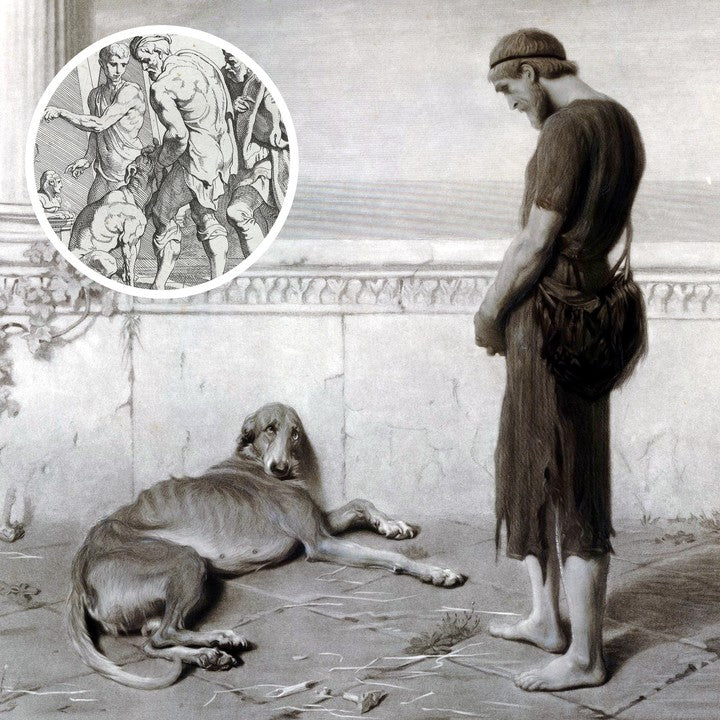
My grandfather was born on Ithaca, and the first story he ever read me was Book 17 of Homer's Odyssey. Odysseus comes home after twenty years away, disguised as a beggar so no one will recognize him. Then an old dog lying neglected by the gate lifts his head, drops his ears and wags his tail. It's Argos, the dog Odysseus raised himself before he sailed for Troy.
Homer says Argos lived to see his master again in the twentieth year. By the poem's own clock, that makes him past twenty, an age very few dogs ever reach. In a 2024 study of more than half a million dogs in the UK, the typical dog lived about twelve and a half years.
Argos lives in a poem, but Homer clearly knew real dogs. I study how dogs age, and one question has followed me since I was a child: how does a dog live that long, 3,000 years ago?
Homer never tells us what Argos ate. But he does tell us about the grass. In Book 6, mules graze on what he calls honey-sweet agrostis, and the standard dictionary of ancient Greek reads that word as one plant: Cynodon. Cynodon is a Greek name, too. It means "dog's tooth."
When I finally went to Ithaca to look for it, I didn't have to look hard. Botanists have collected Cynodon on the island at Polis Bay, below the village of Stavros, and there it was, growing between the stones above the water. Back home, I found the clue that stopped me cold: chemists have found resveratrol-family compounds inside Cynodon.
Twenty years. Everyone who loves an old dog does that math sooner or later. But you can't bring Ithaca's hillside to an American dog. Lawns here are often treated with chemicals, dogs don't really digest grass, and nobody knows how much of those compounds a single blade holds.
I started them on Pawprint Protocol and honestly the first thing I noticed was that they started scarfing up their food in a way they hadn't been. More energy, more enthusiasm, just more like themselves.
Individual results may vary.
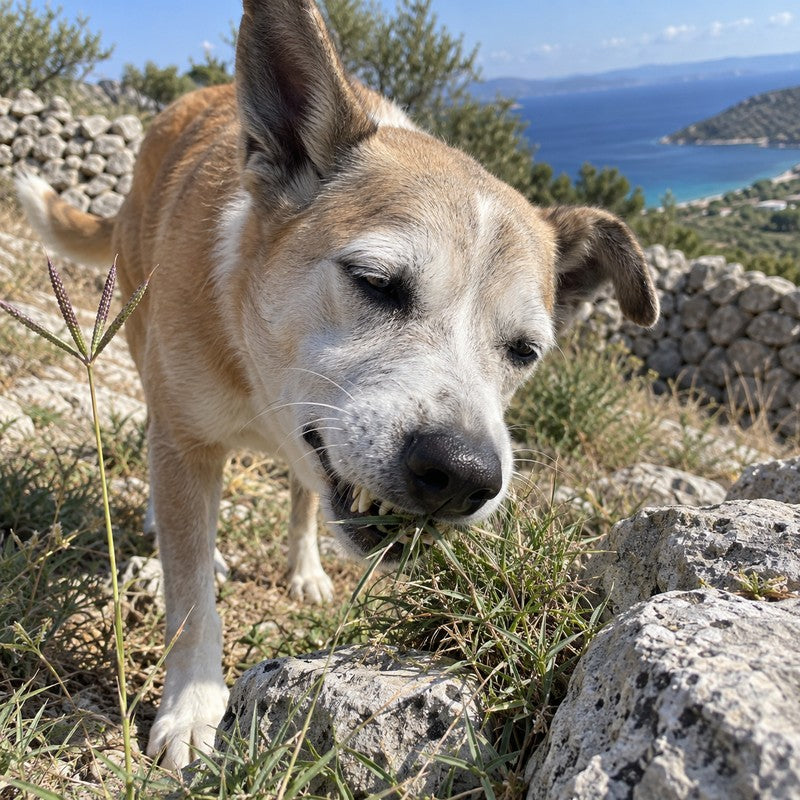
This part surprised me when I went through the research: grass eating usually isn't a sign that something is wrong. In a UC Davis survey that heard from more than 1,500 owners, 68% said their dog ate plants every day or every week, and the researchers describe plant eating as normal dog behavior.
Every owner of an old dog knows the other half of this. He finds the pill inside the cheese every time. He licks the peanut butter off the spoon and leaves the tablet on the floor. But on the morning walk, the same stubborn dog stops at the same strip of green and chooses it himself.
No one ever had to teach a dog to do that. The researcher in me adds one caution: a dog who suddenly eats grass frantically, or vomits often, needs a vet visit, and a treated lawn is no place to graze.
My two dogs loved this vitamin they took it like champs. I get really nervous with vitamins because most of the time they won’t even touch them
Individual results may vary.
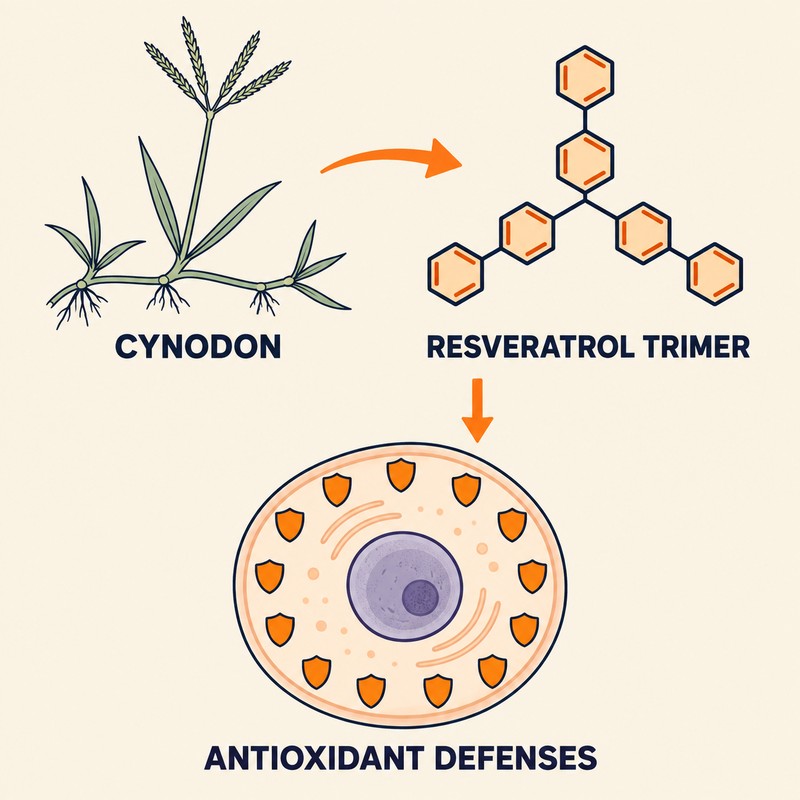
In 2017, a team of chemists dried Cynodon, extracted it and isolated two new compounds. A scientific review published the same year files them under resveratrol trimers: three units of resveratrol linked into a single molecule. The chemists wrote that this ordinary grass may be a rich source of compounds like these.
Resveratrol is the best-known member of that family, a plant compound researchers have studied for years. In cell and animal studies, it switches on Nrf2, a master switch for the body's own antioxidant defenses: the systems cells use to handle the wear and tear of an ordinary day.
An old dog has been handling that wear for a long time: every breath, every meal, every walk around the block. Most of us call the slowdown "just age" and stop asking. I've never been good at stopping.
I’ve been giving this Pawprint supplement to my dog for a few weeks now and I can already see a difference. He seems more active and his overall energy looks better. He also enjoys taking it, which makes it super easy to add to his daily routine.
Individual results may vary.
Greeks have a word for the thing I look for: kéfi. High spirits. The spark that gets a dog to the door before you've found your keys. It rarely disappears in one day.
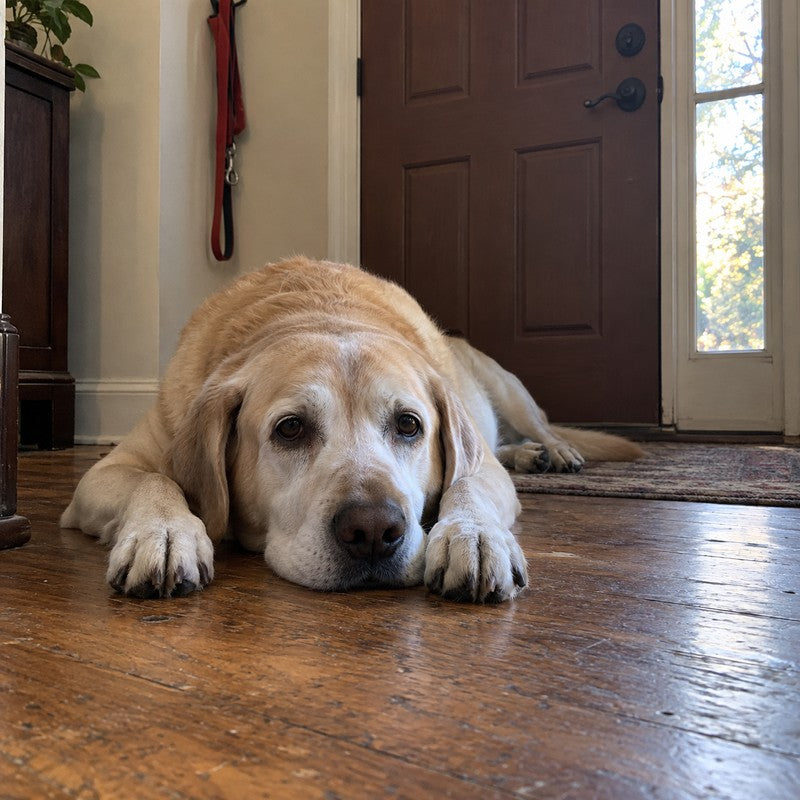
It fades in pieces that are easy to explain away. A walk that turns for home at the second corner. A bowl that sits half full until noon. More of the day on the cool floor by the door, and less of it at the door itself when you come home. None of it feels like an emergency, so most of us wait. If something changes suddenly, or he stops eating, that's a vet visit first.
Then I think of Argos, too weak to get up, still lifting his head at the gate after twenty years. That's the picture I keep: the head that still comes up when you walk in.
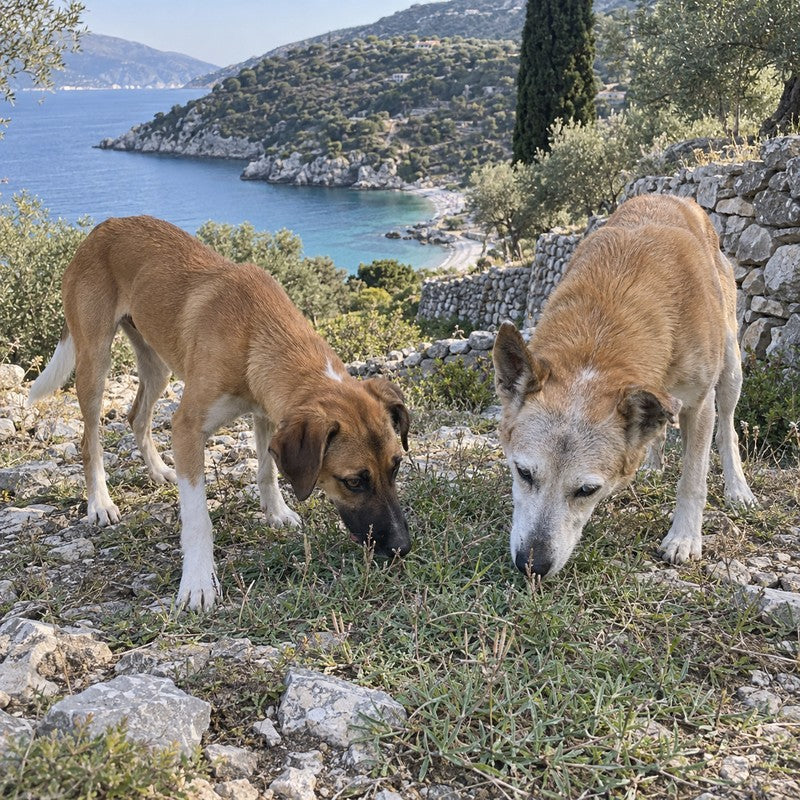
People who hear this story always ask me the same thing: when should they start paying attention? They expect me to say eight, or ten, or "once he slows down."
I tell them about one morning on the hill above Polis Bay. A lanky yearling and a white-faced old dog were working the same patch of Cynodon, side by side, in no hurry at all. Dogs don't wait for old age to start chewing grass. They do it their whole lives.
Whatever the grass means to a dog, it isn't a rescue for a bad year. It's a small, ordinary habit, repeated every day for a lifetime.
Start his morning dropper tomorrow →
Such a huge difference for my little old lady. There’s a new pep in her step. She’s 10.
Individual results may vary.
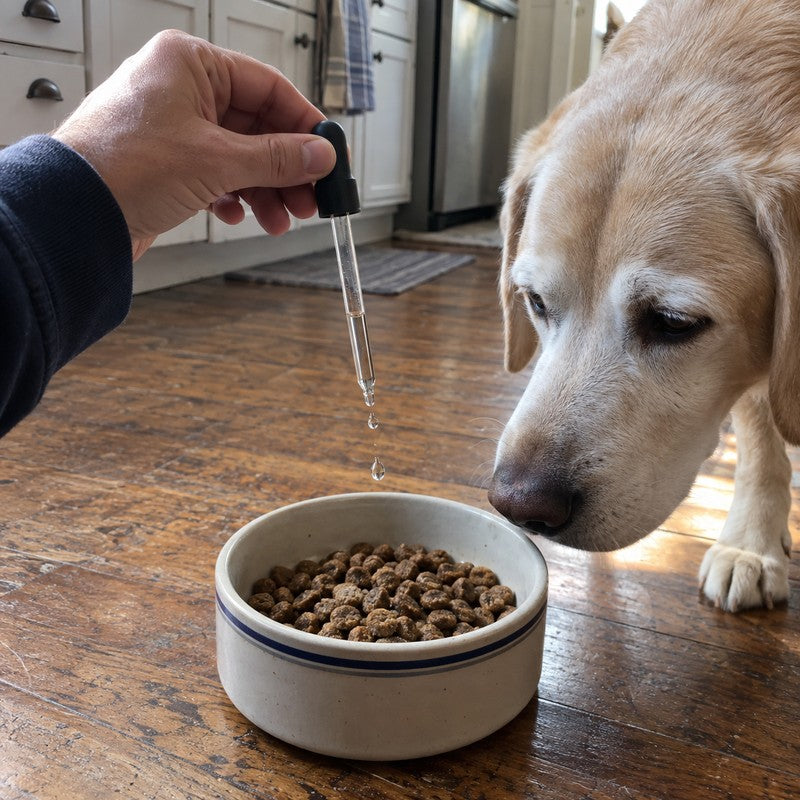
Every clue in this story leads back to something you can check: Homer's lines, the lexicon entry, the herbarium records from Ithaca, the chemistry paper. I read pet-supplement labels the same way, and most of them fail. A chew with no daily amount printed anywhere. A powder that says "proprietary blend" and little else. You shouldn't need a chemistry degree to feed your dog.
My dog is picky so I LOVE that this is a liquid. It's so easy to add to his food and he has no problem with the taste at all. I've noticed a real difference in mobility and overall alertness and it fits so easily into our daily routine.
Individual results may vary.
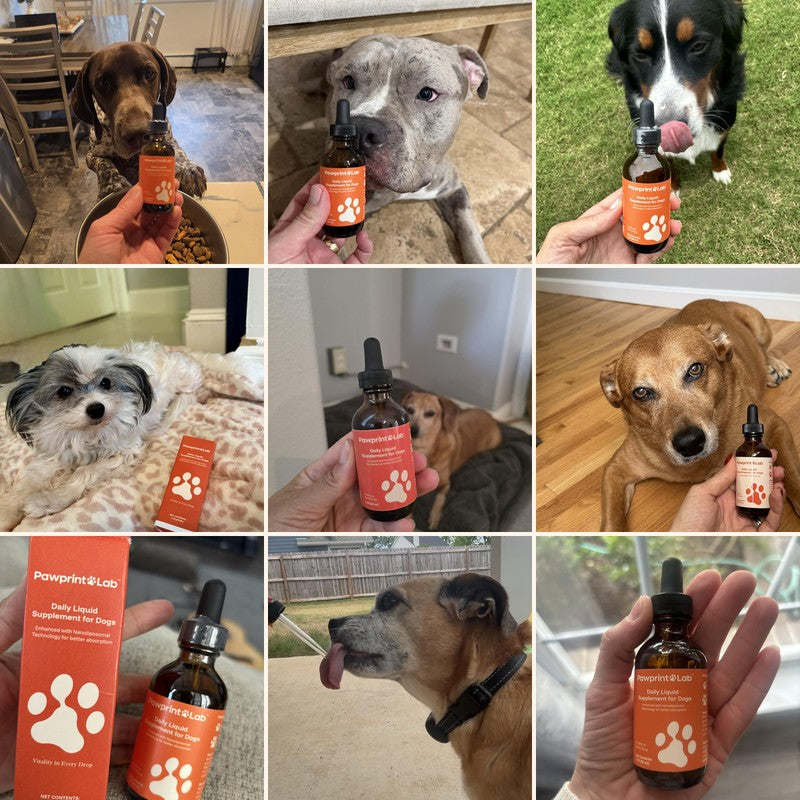
Every photo above comes from a customer's review: big dogs and small ones, young faces and white ones, each with the same small amber bottle beside the bowl.
Pawprint Lab is rated Excellent, 4.6 out of 5, from 129 reviews on Trustpilot. The thing owners mention most is how little the routine asks of them: a dropper on the food, and the morning carries on.
I have a 13 year old and an 11 year old dog. Both seem more comfortable getting up after a nap since we started this.
Individual results may vary.
Argos waited twenty years for one more moment with the person he loved. None of us gets to choose how many years we have with our dogs. We do get to choose what happens every morning.
Pawprint Protocol asks for one small habit: the droppers for his size on breakfast, every day, until it's simply part of how your mornings go.
And you don't have to decide on faith. Every order is covered by our 90-day money-back guarantee, so if it isn't right for your dog, you can ask for your money back.
The current price, bottle bundles and the Subscribe & Save option are on the product page. Choose what suits you, and tomorrow's breakfast can be the first one.
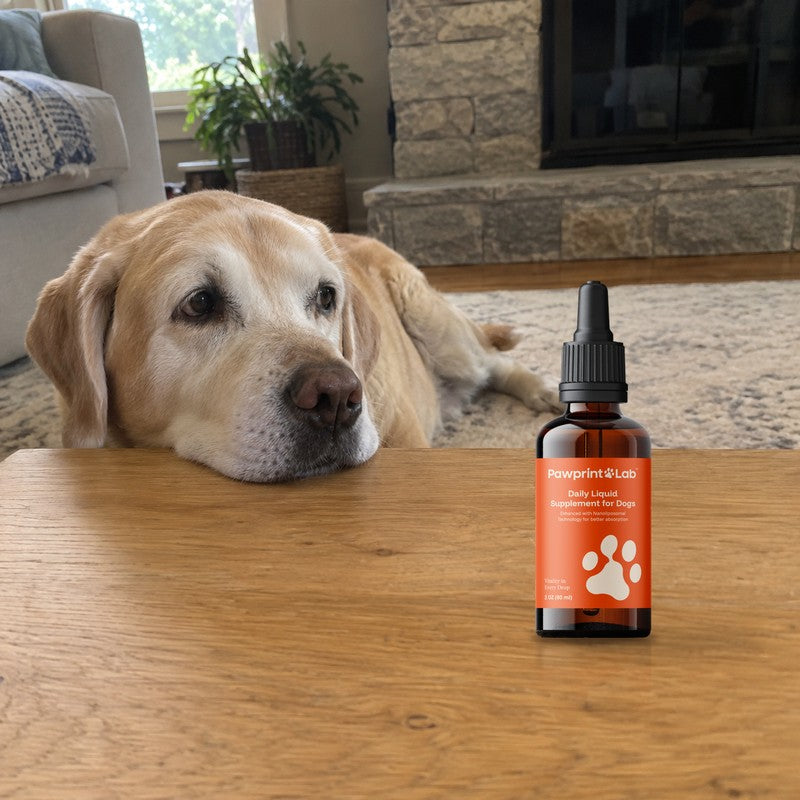
One clear dropper, every breakfast
Daily Cellular Energy Support For Senior Dogs
From $1.33 a day: 6 bottles with Subscribe & Save at $39.99 each. A single bottle is $51.75 with Subscribe & Save (about $1.70 a day) or $69.00 one-time. Per-day prices follow the product page, which counts one bottle as 30 days; larger dogs use more. Prices from the product page on 9/25/2026.
CHECK THE FORMULAPawprint Protocol is a dietary supplement, not a medicine, and not a stand-in for grazing. It supports daily cellular energy and doesn't replace a complete and balanced diet or your veterinarian's care.