

After “What They Discovered”
 The hard day
You saw the hard day. The video has already shown you Pawprint Protocol.
What stays with you now is how ordinary the earlier signs looked: another long nap, half a walk, then the evening he greeted you from the rug.
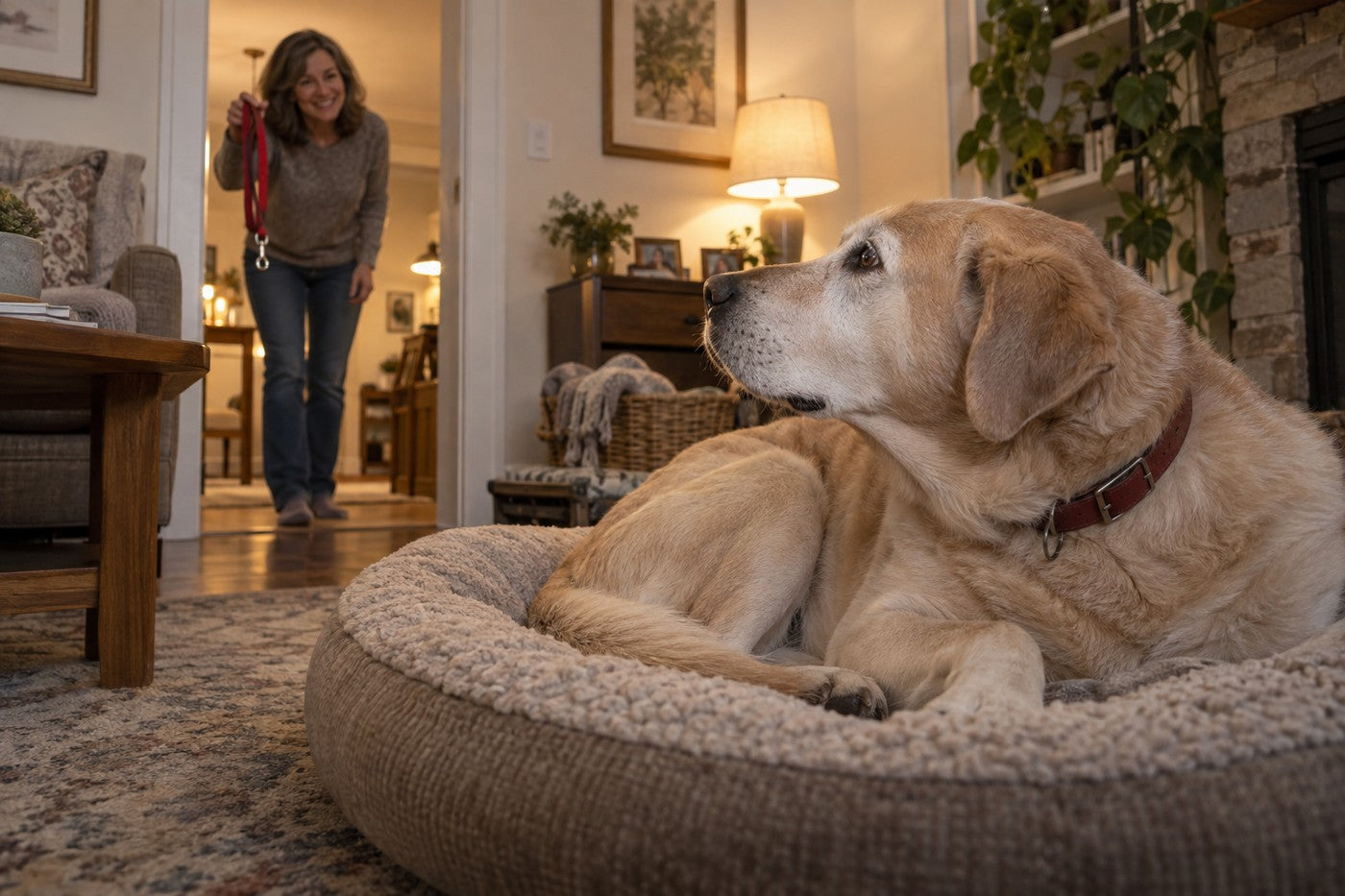
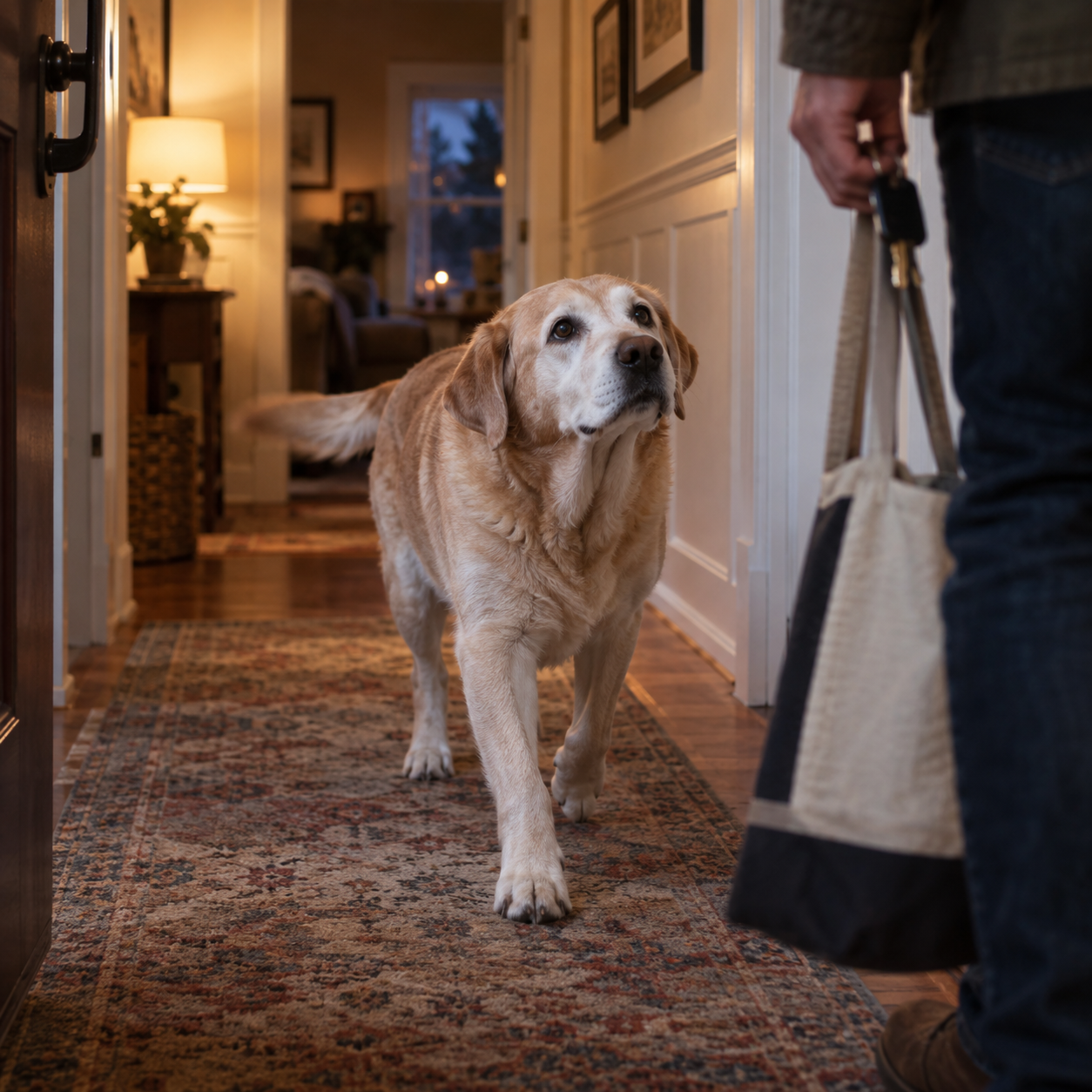
You know the moment. For years, the second your key touched the lock, you’d hear him. Nails skidding on the hallway floor. The runner rug bunching up. Then a thump against the other side of the door, because he never once learned to brake in time.
Now you turn the key, push the door open, and stand there with your bag still on your shoulder.
Nothing. No nails. No thump. No tail slapping the wall.
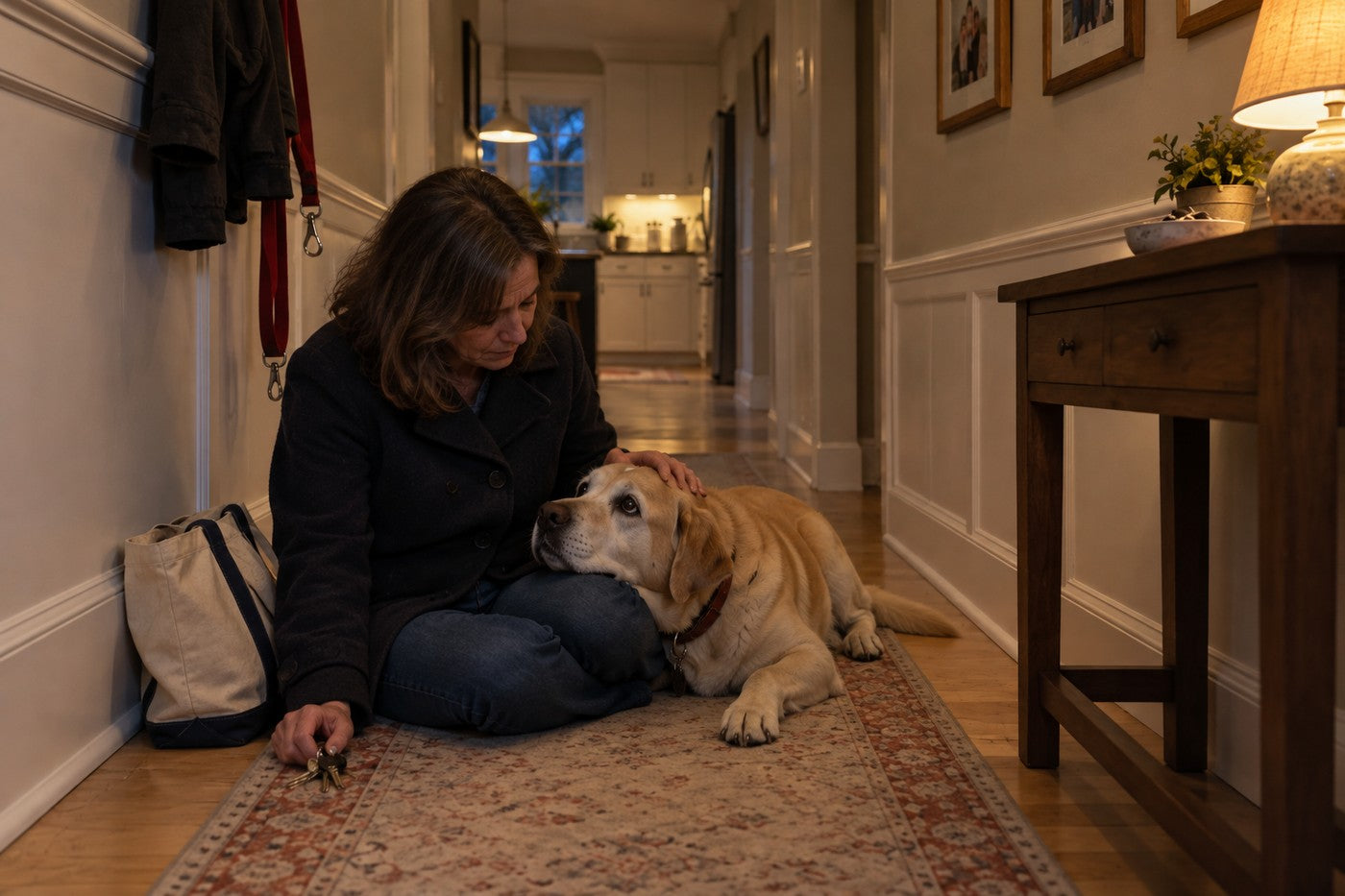
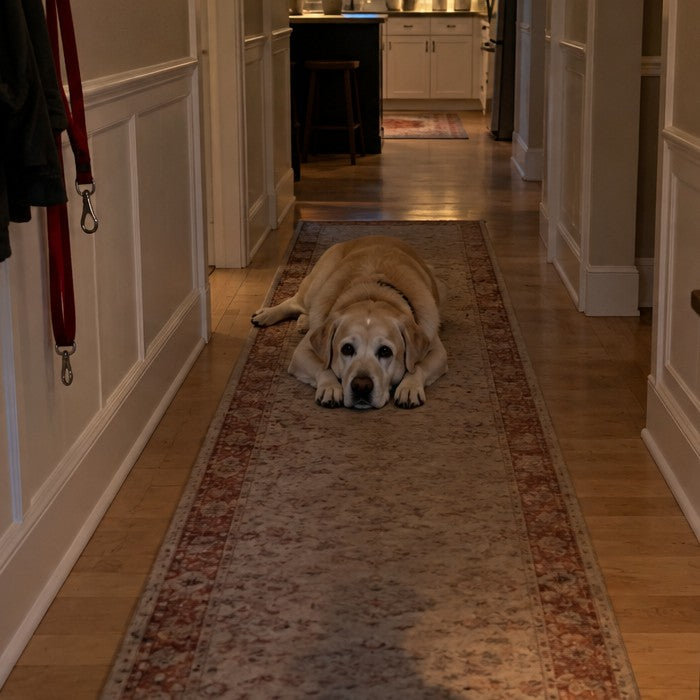
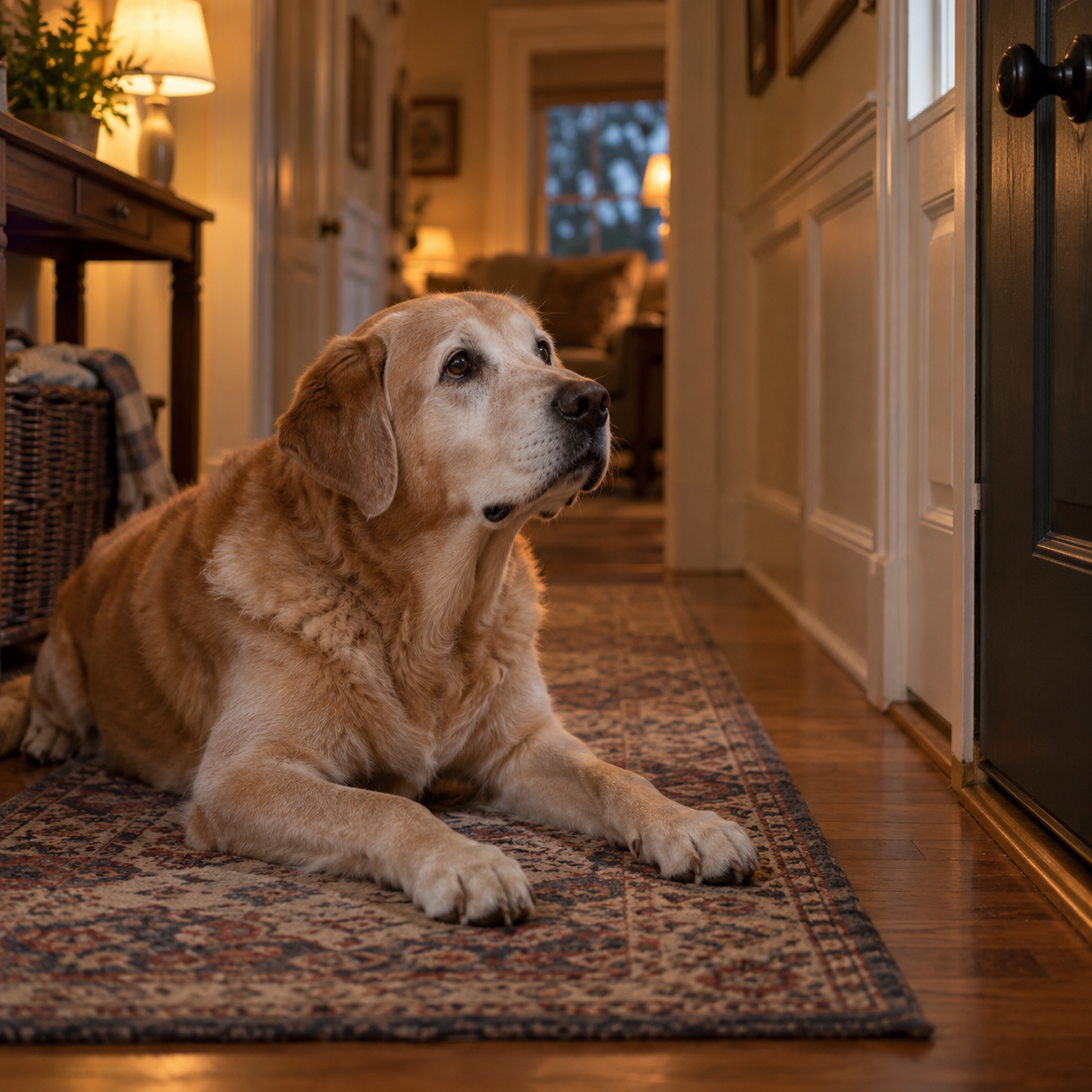
He’s lying on the rug halfway down the hall. Awake. His eyes come up to meet yours, and his tail lifts once and settles.
That look. Glad you’re home. Not getting up.
And the part almost nobody says out loud: you’ve started walking over to greet him. Keys in the bowl, down the hall, down on one knee by the rug, because that’s where the greeting happens now. It became part of your evening so gradually you can’t remember the first time he didn’t come.
Here’s what owners notice and can’t explain. He isn’t hurt. He still eats well. He still leans on your legs at night, and his tail still thumps when you sit down next to him.
He still wants you. He just doesn’t come and get you anymore.
If that sounds like your house, you’re not the only one standing in that doorway. Here’s how three owners put it on Reddit, quoted exactly as posted. They aren’t Pawprint customers.
man, it just hit me. my old dog he don't rush to the door no more. used to be a maniac for walks. now? just watches me.
It’s been gradual but really hit me in the last few days how much slower and less enthusiastic she is now than even a year ago.
He still wags, still eats well, still nudges my hand for attention, but everything he does has become softer, slower and more delicate.
Different dogs. Different houses. The same quiet where the noise used to be.
That’s the detail that tells you this isn’t random. If he’d simply stopped caring, you’d see it everywhere at once. You don’t. The wanting is still there. It’s the get-up-and-go that’s gone missing.
There’s a reason it fades in that order — and it has nothing to do with how much he loves you.
If that last one hit, read this part carefully, because it’s the one owners get wrong about themselves.
“He’s just old” describes what’s happening. It doesn’t explain it.
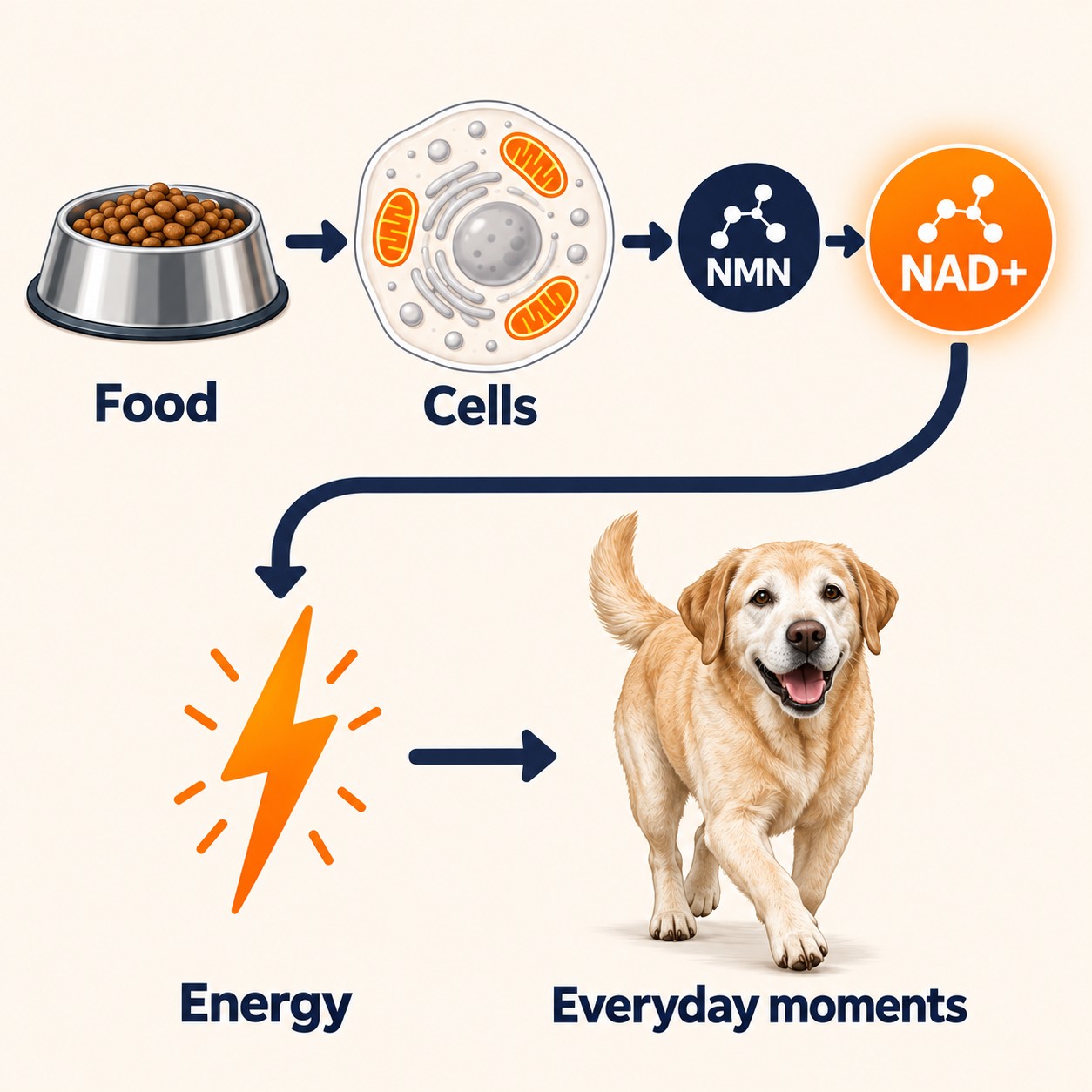
Here’s the part nobody explains. Everything he does runs on energy his cells make, all day long, out of the food in his bowl. Lifting his head. Standing up. Trotting down a hallway because he heard a key.
When there’s less of that energy to go around, a body doesn’t cut back evenly. It protects the essentials — eating, sleeping, leaning on you at night — and lets the extras go first. The sprint down the hallway. The jump at the leash. The lap around the yard.
Biggest effort. Least essential. First to go. That’s why the door goes quiet before anything else does.
And it’s energy, not affection. Which is why a new toy or a longer walk can be a lovely idea and still do nothing for the thing you’re actually watching.
One more thing that matters. Not every slowdown is age. Pain, illness and other medical problems can look almost identical and need a vet, not a supplement. If the change came on fast, or he struggles to stand or walk, get him seen first.
Most owners reading this have already tried something. A new squeaky toy to spark him up. A senior kibble. A joint chew, in case it was his hips. Longer walks to keep him moving, then shorter ones when he flagged.
And when nothing changed, somewhere in the back of your mind you decided that was on you. You noticed too late. You let him rest too much. You should have pushed him harder.
Almost none of that is true. There are two much simpler explanations, and neither one is your fault.
First: the wanting was never the problem. Toys, games and new routes are all ways of making him want it again. He already wants it. Watch his eyes when the key turns. What he’s short on is what it takes to act on it.
Second: everything you tried worked from the outside. A new toy changes what’s in front of him. A new food changes what’s in his bowl. Neither one changes how much energy his cells can make out of it.
Underneath both is the same thing. His muscle, brain and heart cells are packed with mitochondria, tiny power plants that turn food into usable energy [1]. They run on a helper molecule called NAD+. In people, NAD+ is widely reported to fall with age, though researchers still argue about how universal that is [2]. In studies on aging mice, an enzyme called CD38 climbs with age and drains it faster [3].
Less fuel made. More fuel drained. And the first thing a low battery cuts is the sprint down the hallway.
Pawprint Protocol is built around one job: give his cells a building block they use to make NAD+, in a liquid built to be absorbed, not just swallowed.
The lead active is NMN, and it has published dog research behind it: in an oral safety study, beagles tolerated it well [4].
Use the dropper to add his daily amount to his food: 1 to 4 droppers once a day, set by his weight. Follow the directions on your bottle, and ask your vet about use alongside medications or other supplements.
| Size | Weight | Daily amount |
|---|---|---|
| Small | Under 22 lb | 1 dropper |
| Medium | 22–55 lb | 2 droppers |
| Large | 55–88 lb | 3 droppers |
| Giant | 88 lb and up | 4 droppers |
Daily amounts as listed on the Pawprint Protocol product page, checked 9/27/2026. Always follow the directions on your bottle.
And it’s a clear liquid on whatever he already eats. No pill pockets. No cheese. No chew he has to agree to.
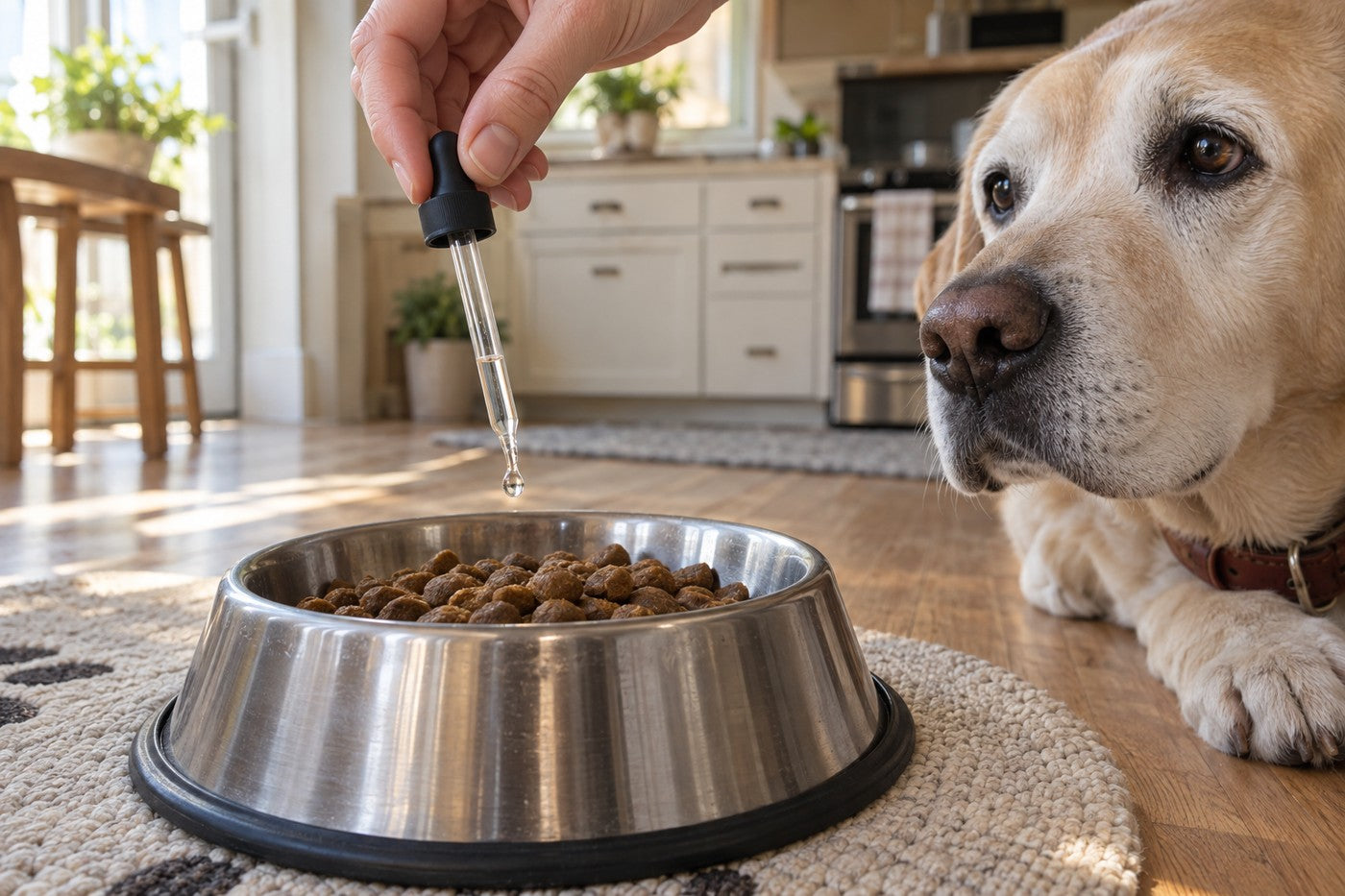
You are not buying another distraction for the dog who stays on the rug. You are choosing daily support for the energy behind getting up, finishing the walk, and coming to meet you.
The senior aisle at any pet store is a wall of the same promises: a softer bed, calmer joints, a shinier coat. None of them are about the sprint to the door. If they were, you wouldn’t be reading this.
Pawprint Protocol works one level deeper — inside the cells that make the energy every step down that hallway runs on. One liposomal liquid on his food, once a day.
Four actives, each with a job:
Pawprint Protocol combines NMN, NAD+, resveratrol and CoQ10 in an easy-to-use liposomal liquid for dogs.
Made for dogs 7 and up. Individual results may vary.
Pawprint recommends at least three months of consistent use, but you don’t have to wait three months to see anything. The first changes are small, and they show up where the fade started: at the door. Here’s the order to watch for. Individual results may vary.
Small, and easy to miss if you’re only listening for paws. His head is already up when you walk in, instead of after you say his name. The tail gets two thumps instead of one. You catch yourself heading down the hall to greet him on the rug, and find him already sitting up.
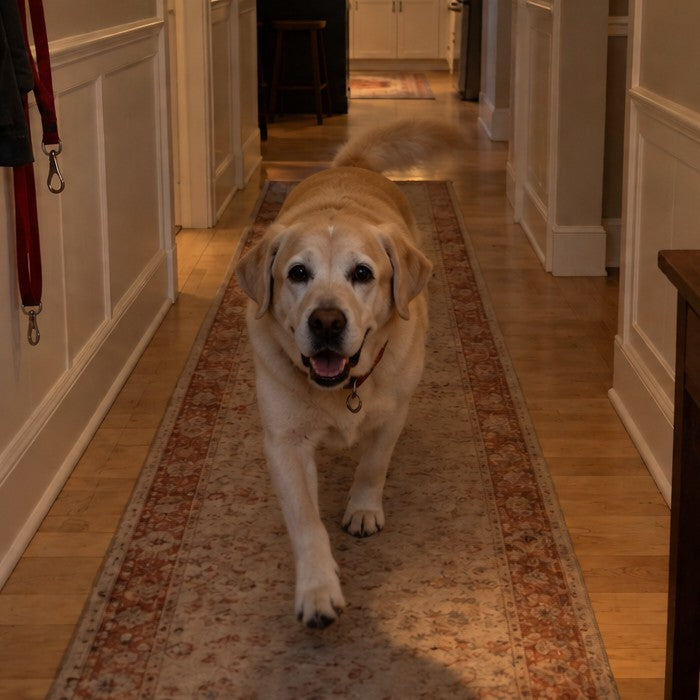
This is where the rug stops being where the greeting happens. He’s on his feet by the time your keys hit the bowl, and halfway down the hall before you’ve shut the door. The leash comes off the hook and gets more than a look. Walks stretch out because he didn’t turn for home, not because you pushed him further.
The squeaky toy gets chased instead of watched. The squirrel on the fence gets an opinion again. He’s in the kitchen the second the fridge opens. Good evenings stop being events and start being most evenings.
This is the one you’ve been waiting for. The key turns, and you hear him before the door is all the way open. Maybe not the thump against the door. But him, coming to get you.
Three months in, the job changes from noticing to keeping. Age doesn’t take a day off, so the routine shouldn’t either. The dogs who keep their spark are the ones who stay on it.
And it’s worth saying plainly: the sooner a dog starts, the more of that spark there is to support. Individual results may vary.
“My dog has been on PawPrint Lab daily supplement for 2-3 weeks now and there is a notable improvement in her mobility. I noticed a difference within a few days. I will be ordering more of this product.”
“Now the product is good it has helped my 10-year-old dog walk a little better and we’ve only been on it for 30 days so for a small Improvement I was very pleased. I would recommend.”
“My German Shepherd... was so laid back - not like any other shepherd I had before. He didn’t like to play with balls or run around - just wanted to love on me, maybe play with stuffed toys and lay around. Now that I have tried this supplement, he is getting up more and playing with my other Shepherd more.”
For the dog who’s still in there
The hard day frightened you. But the earlier days were the ones you recognize: the walk that ended early, the leash that got a look, the greeting that never made it past the rug.
Everything before it — the shorter walks, the leash that got a look, the squirrel he watched instead of chased — was the same thing showing up quietly. He didn’t stop wanting you. He ran low on what it takes to come and get you.
Protocol makes that decision tangible: a weight-based amount on the food he already eats, every day. Start with tonight’s dinner.
Reviews are unedited excerpts from verified Trustpilot reviews of Pawprint Lab. Individual results may vary.


