

Senior dogs · Mornings
It felt like the first stiff morning. What if it was only the first one I could see?
The narrator is a composite of several senior-dog owners, not one customer, and the clips show different dogs. Nothing on this page is veterinary advice.
For ten years, Tucker beat me to the front door. I’d reach for the leash and hear his nails on the hallway floor before my hand was off the hook.
That Tuesday I had the leash in my hand, and the hallway was quiet.
He was still on his bed. He saw me, and he tried. His front legs came up straight and strong. His back legs slid out behind him on the wood, his hips sank back toward the floor, and he looked up at me like he didn’t understand it either.
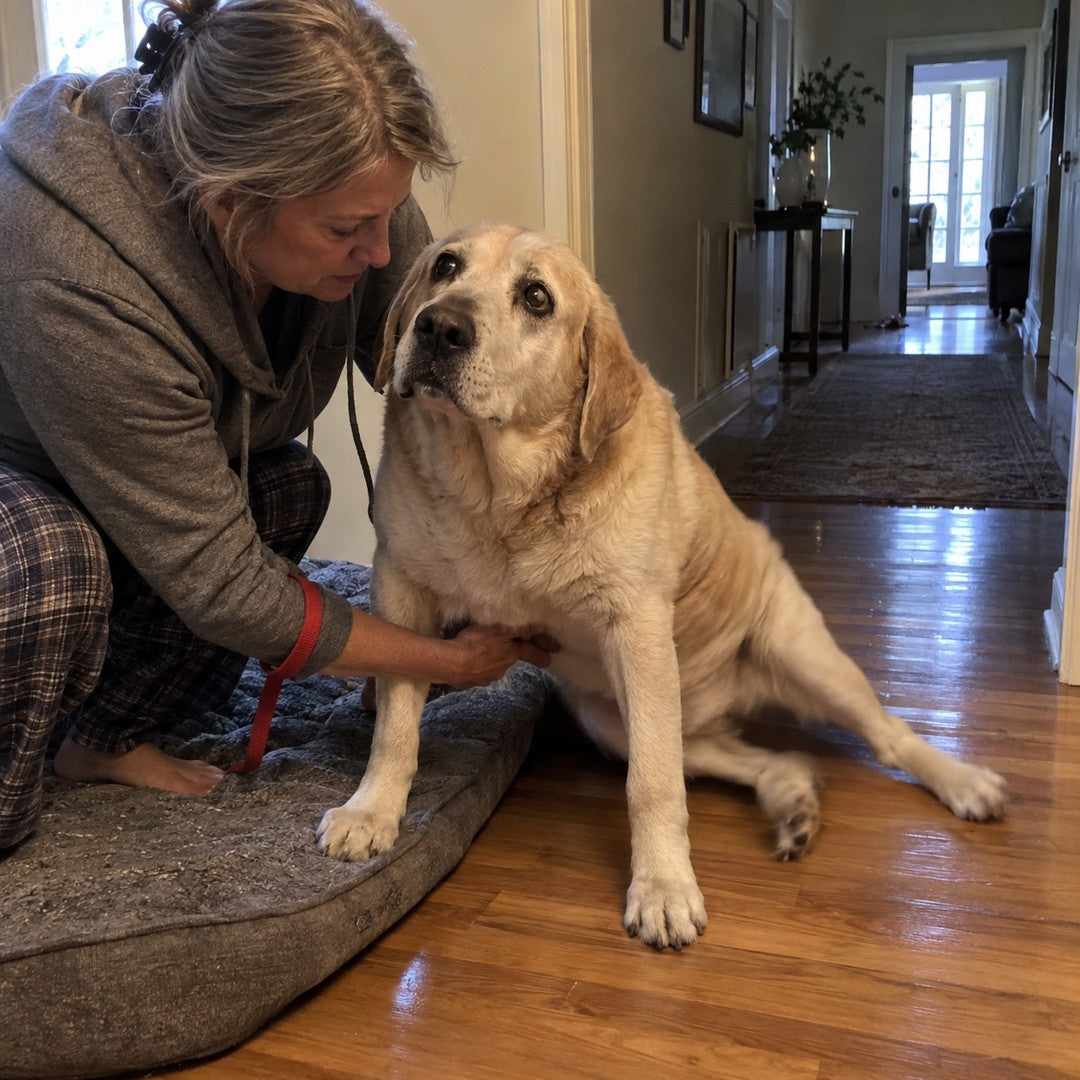
I knelt down and got my hands under him. He’s a big dog. We got him up together, slowly, and he leaned against my leg for a long moment before he took a step.
And the whole time I was thinking one thing: is this one bad morning, or the start of losing our walks?
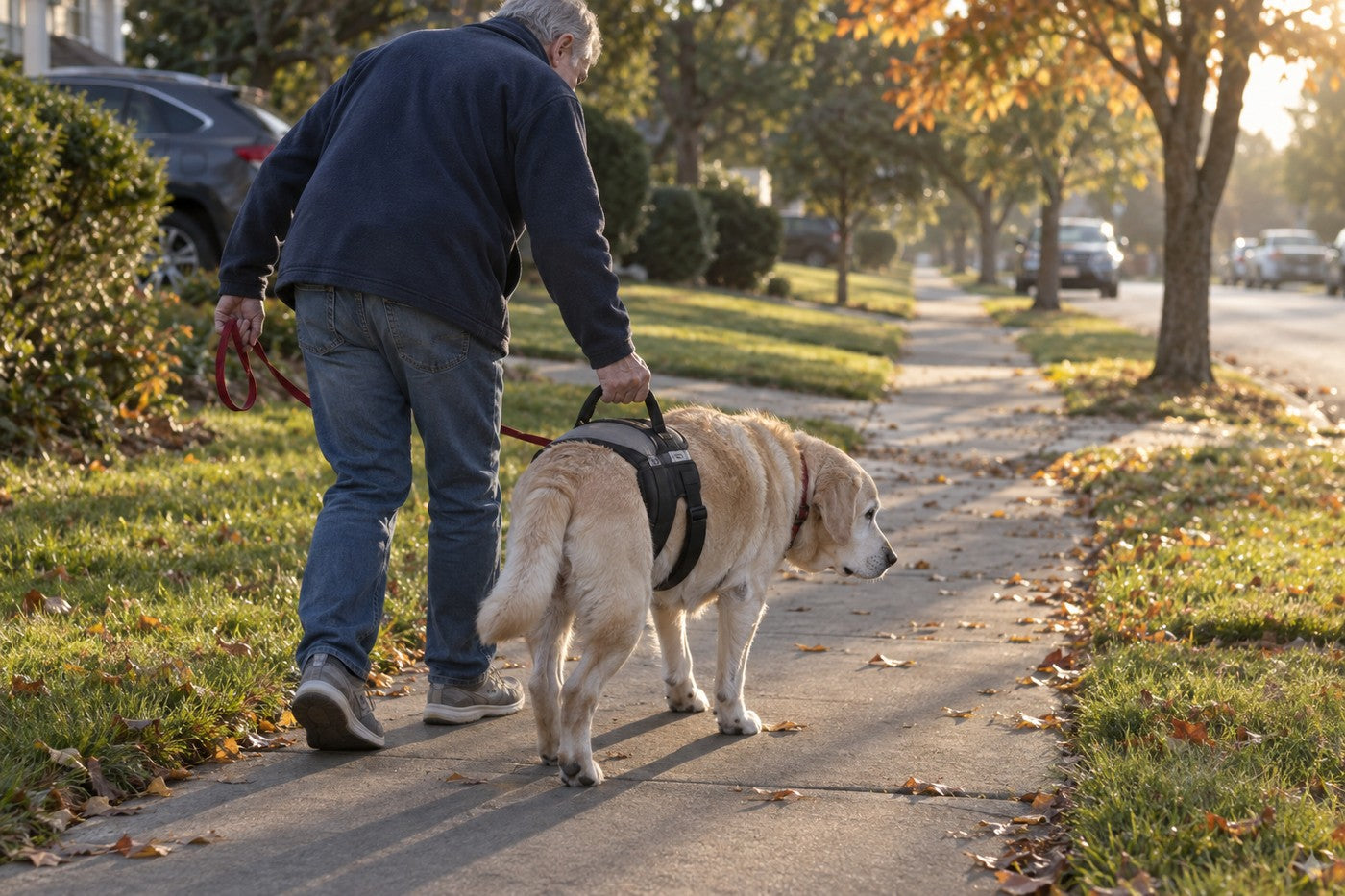
We did walk that day. Half our usual loop. He stopped twice, and both times he looked back at me.
Some dogs live for the ball. Tucker lives for the walk: the same loop, the same corner where he stops to read the news, the same neighbor who keeps biscuits in her coat pocket. The leash coming off the hook has been the best sound in his day for ten years. Maybe in mine too.
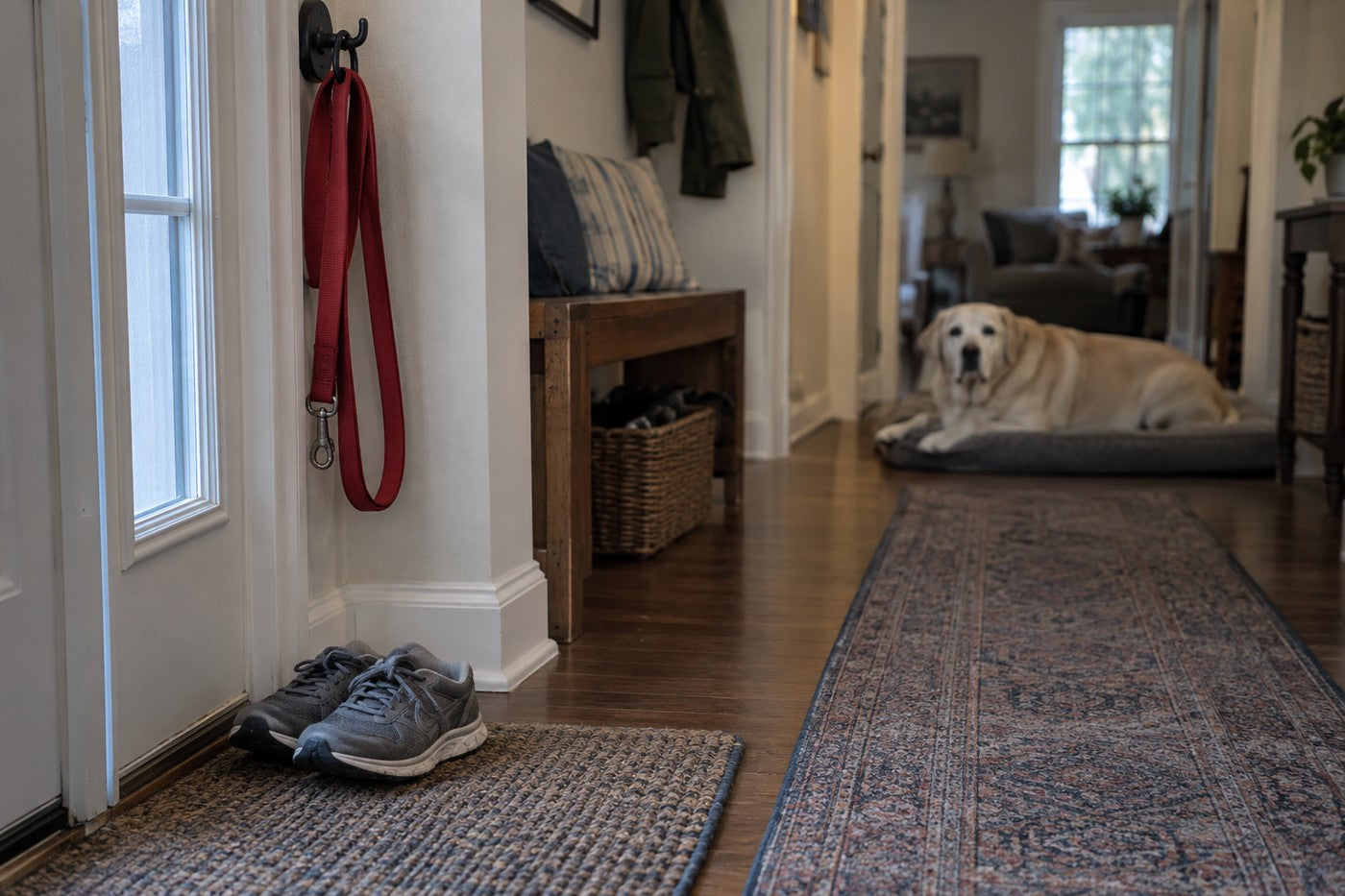
So when his back legs wouldn’t hold him, the stiffness wasn’t really what scared me. It was what the stiffness looked like the beginning of. Shorter loops. Then just the corner and back. Then the leash staying on its hook.
I wasn’t afraid of the stiffness. I was afraid of the leash staying on the hook.
Here’s the question that changed how I saw that morning. The day you notice stiffness feels like the beginning, because it’s the first time you can see anything at all.
But a body rarely changes like a light switch. Nothing about Tucker went from fine on Monday to stiff on Tuesday. What if that morning wasn’t the start of anything, just the first morning it showed?
It sent me looking underneath the joint, at what actually lifts a big old dog off his bed.
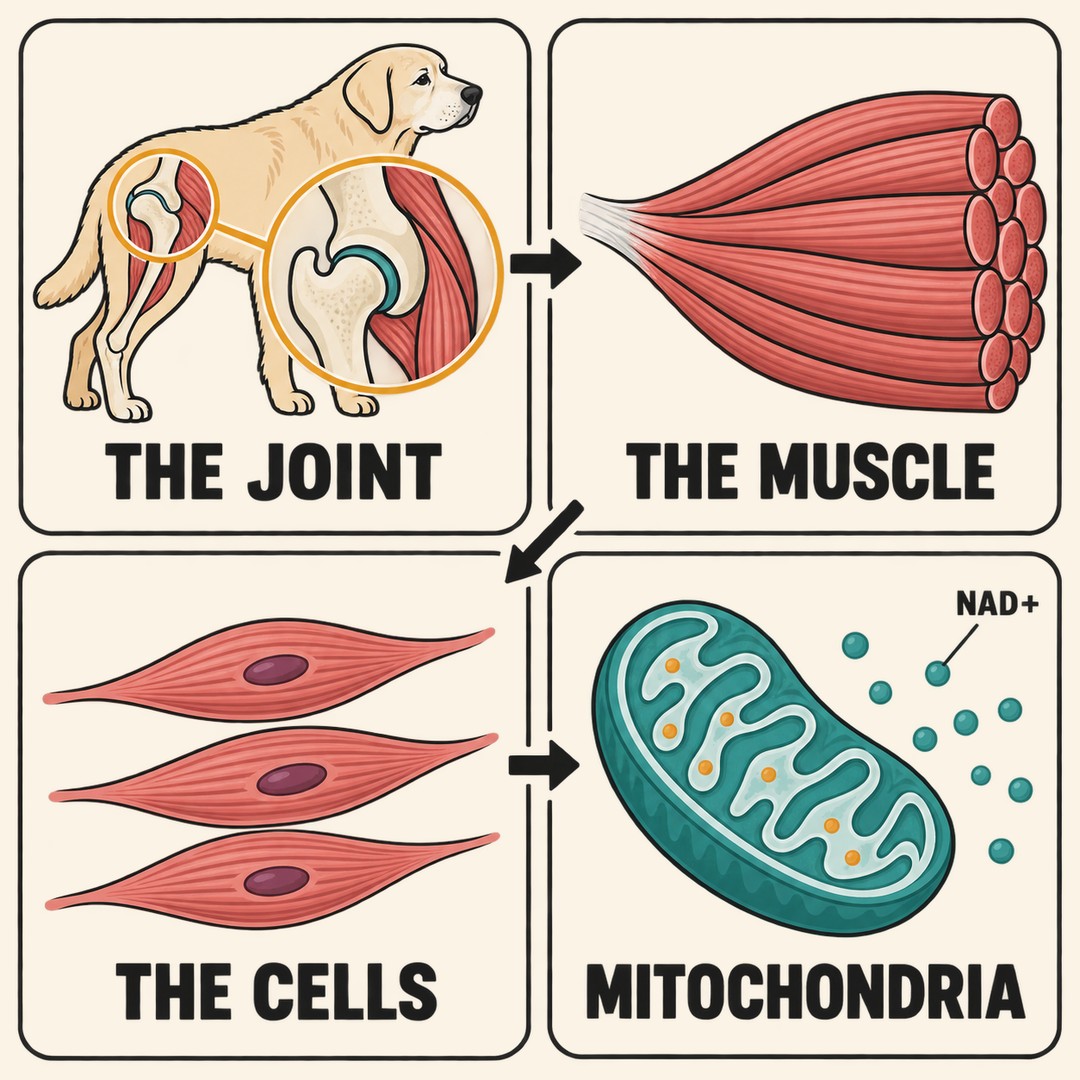
Joints matter, and if your vet recommends a joint product, that’s worth hearing. This is a second question, one layer down: the muscles that do the lifting, and the cells inside them.
Every step he takes is paid for in energy that his cells make, inside tiny structures called mitochondria. To do that work, cells rely on a helper molecule called NAD+. They spend it all day long on ordinary jobs, like turning food into energy.
Nobody can tell you from one stiff morning what is happening inside a dog. But I stopped seeing that morning as a switch that flipped. I started seeing it as the first time a slow, quiet change came up to where I could see it. And I wanted to do something for the part underneath, not only watch the part on top.
Stiffness when an old dog stands up is a sign, not a diagnosis. The same first few steps can come from very different places:
The most useful thing I did that first week was write the mornings down.
A week of mornings, written down
A week of notes like that tells your vet far more than “he seems stiff.” A short phone video of the first rise helps too.
Most stiffness means a normal appointment, not an emergency. But don’t wait for next week if you see any of these:
Call your vet today if he
None of this is a treatment. It’s what made the first ten minutes of his day easier while we waited for answers.
I found out we weren’t the only household doing this. From a public thread of senior-dog owners:
He’s still happy and loves short walks, but the mornings are getting tough stiff legs, taking a while to get up and sometimes he hesitates with stairs.
Also, walking later than first thing. Also more walks that are shorter to keep the joints moving.
He’s twelve. He’s slower, and some mornings he needs my hands. But when I take the leash off the hook, his tail still goes, and he still looks at the door like it’s the best part of the day.
That part is real. I’m not ready to hand it over to the stiffness, and I don’t think you are either.
The part of his morning I can shape
I can’t make his mornings what they were at five. But the morning that holds the stiff first steps also holds his breakfast, and that part of the day I can make deliberate. That’s where Pawprint Protocol fits.
Pawprint Protocol is a daily liquid for senior dogs. It goes on his food once a day, in the same bowl he already knows, and his weight sets how many droppers. It’s a liposomal liquid, designed for absorption.
Inside are four named actives: NMN, NAD+, resveratrol and CoQ10. NMN is the direct building block cells use to make NAD+. NAD+ is the helper molecule cells spend on everyday jobs, such as turning food into energy.
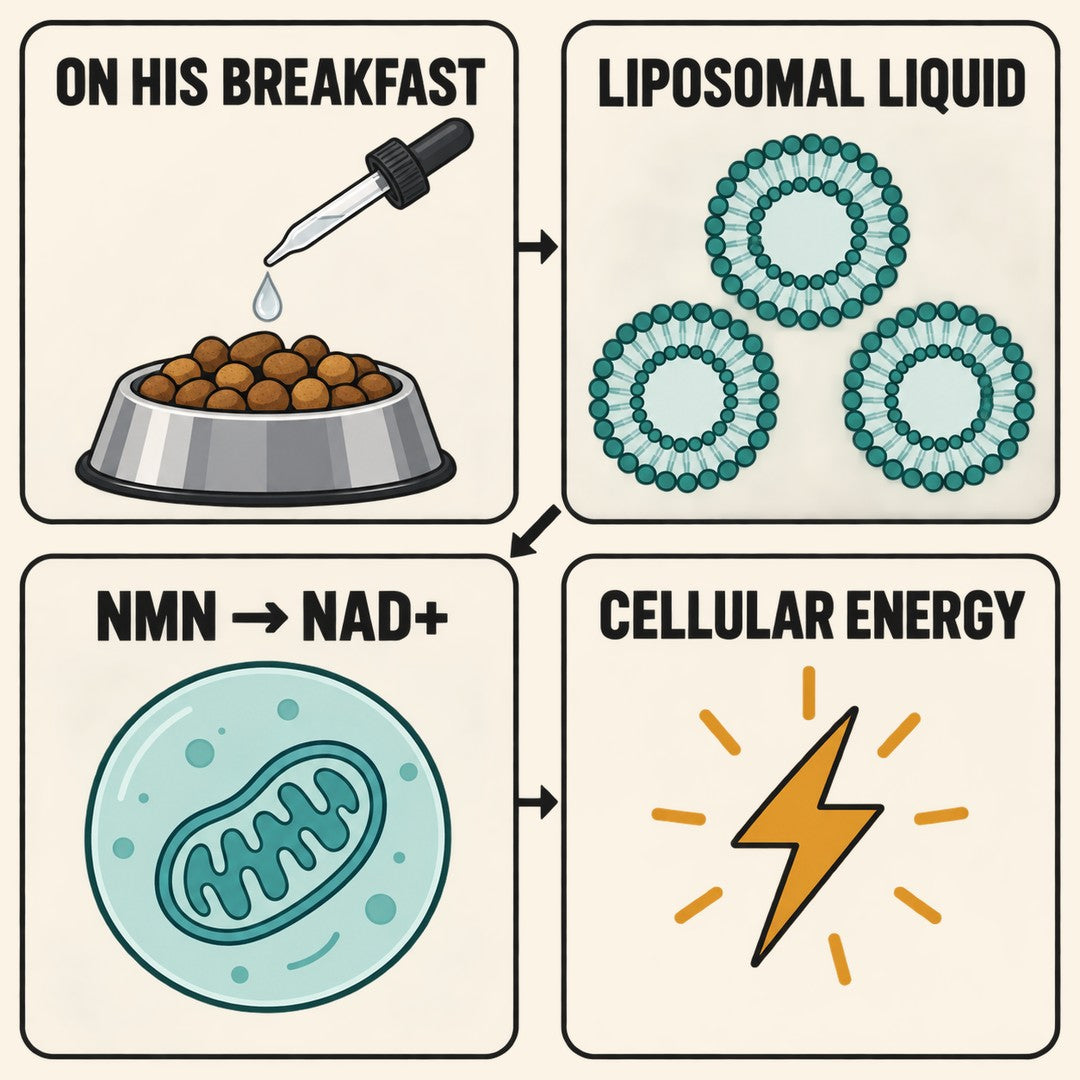
Its job is daily cellular energy support for a senior dog: for the part underneath, every day, in the most ordinary minute of his morning. Keep the vet visit. Keep the runners on the hallway floor and the shorter loops. This is the one thing that goes in the bowl.


