
Wellness Protocol
Everyday support. One simple liquid.
SHOP WELLNESS
Everyday support. One simple liquid.
SHOP WELLNESS
Cellular energy + healthy aging support.
SHOP PROTOCOL
Daily support for skin, coat, eyes + gut.
SHOP ESSENTIALS
Weight, metabolism, heart + vitality support.
EXPLORE CAT PROTOCOL
You are the only person who sees this every single morning. That makes you the one who can spot a pattern — and a pattern is the thing your vet actually needs. Here is how to describe what you saw, and the five signs that do not wait.
Seven in the morning, the bag warm in your hand, and for the third time this week what is in it is not quite right.
Start here, because consistency is the easiest thing to describe accurately and the easiest thing to get wrong from memory. Use a seven-point scale of the descriptive kind veterinary nutrition teams use for grading — you do not need the numbers, you need to know which one you saw and whether it is different from his normal.
Write down the grade, the count that day, and the date it started. Not "a few days ago". The date.
A grade describes what you saw, not why. The same softness has a long list of possible explanations, and appearance does not sort between them.
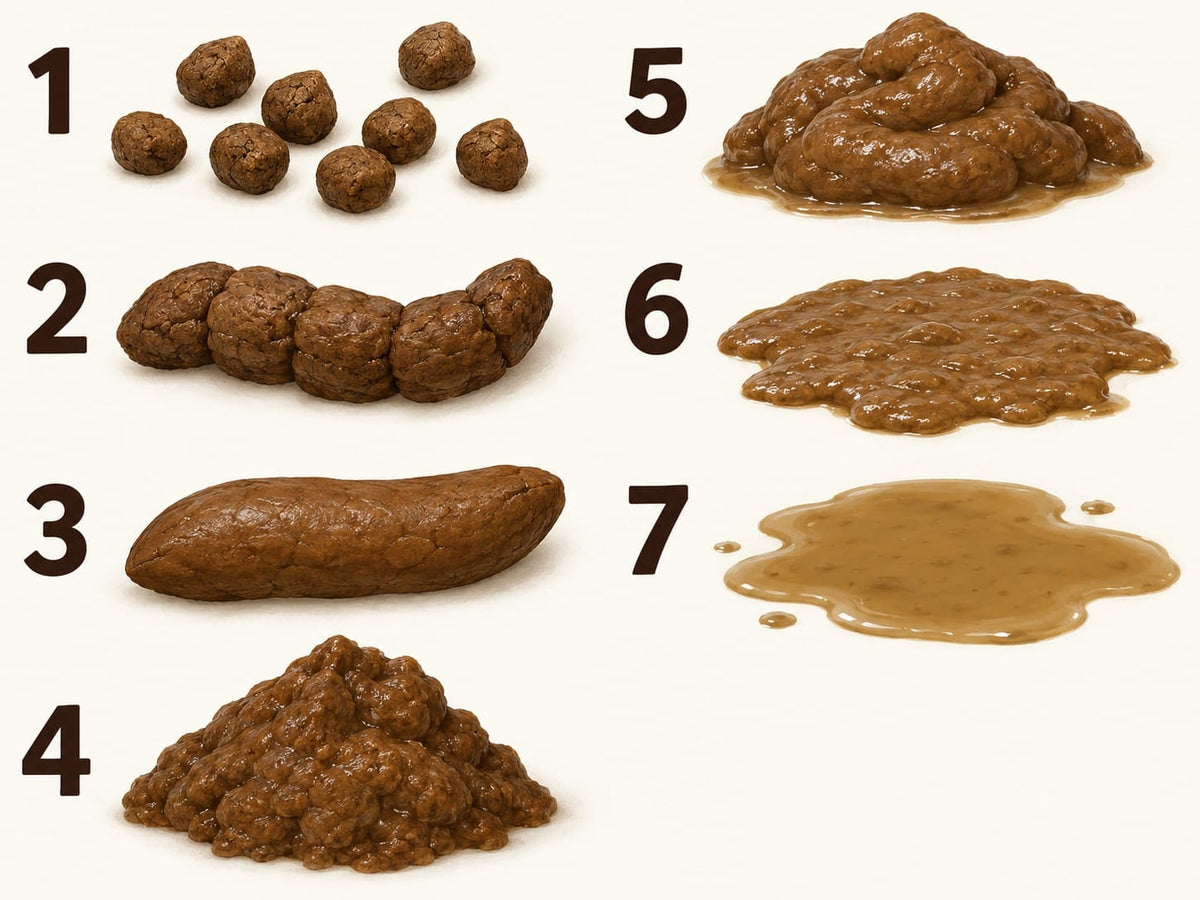
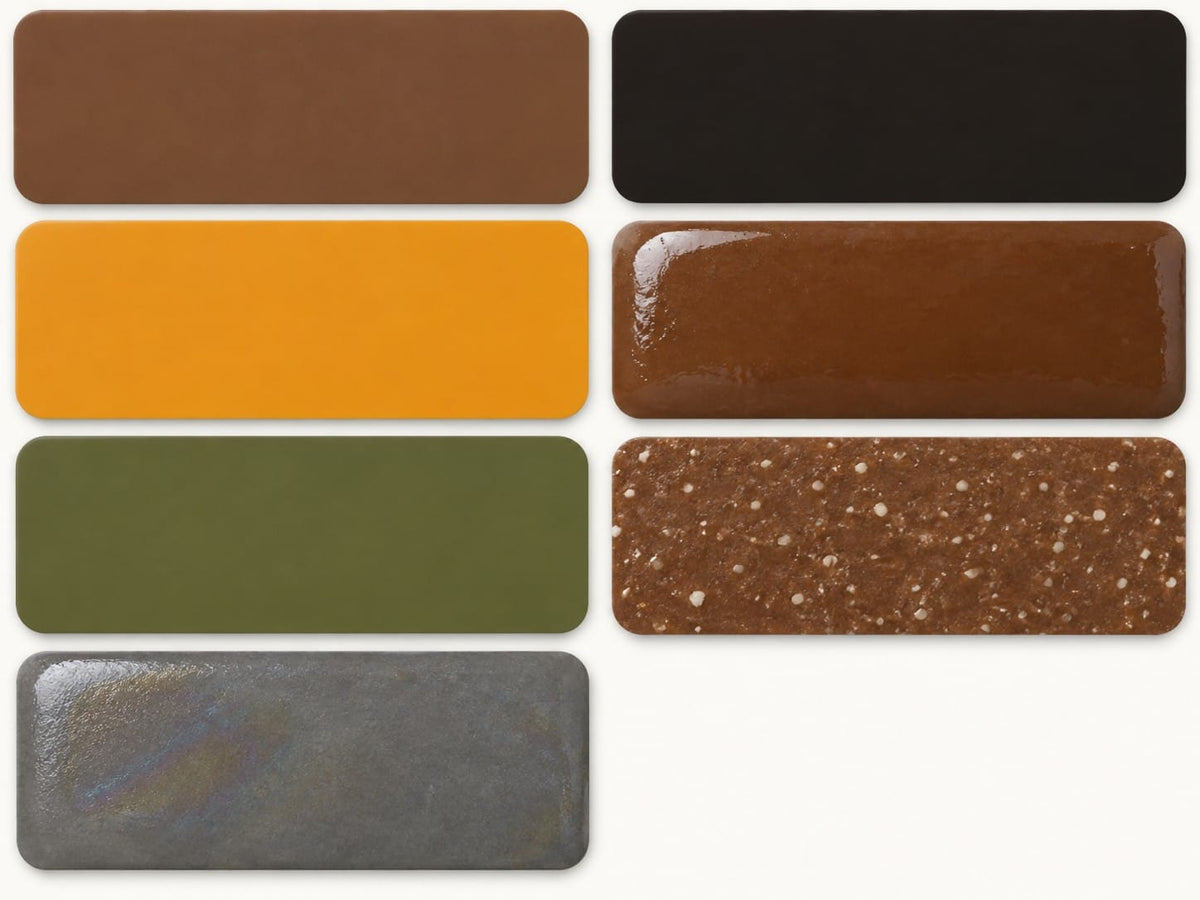
Now the part everyone wants. Color can point somewhere, and owner-facing veterinary guidance says where — but read the hedge in it, because the hedge is the honest part.
The American Kennel Club's guidance puts healthy stool as brown, solid but a bit squishy, in one log-like piece. On the rest it is deliberately careful: orange or yellow, possibly caused by a biliary or liver problem; green, possibly a gall bladder issue or eating grass; gray or greasy, possibly a pancreas or biliary problem; black and coffee-like, possible internal bleeding. It also flags mucus as a possible inflamed colon, and white bits that may be tapeworm.
Every one is a possibly, and grass sits on that list next to the gall bladder. Use the range to describe what you saw — then let point 3 decide whether it waits.
Color narrows the question. It does not answer it. Nothing you see in a bag is a diagnosis, and no chart replaces the tests only a vet can run.
Everything above is worth describing. These five are worth a phone call, and no amount of logging changes that.
If any of these show up, see your vet — and bring the log. Those dated lines answer most of what you will be asked in about ten seconds.
| What you see | What to do |
|---|---|
| Black, tarry or coffee-like stool | Contact your vet. Cornell describes this as partially digested blood; AKC lists it as possible internal bleeding. |
| Fresh blood in the stool | Contact your vet. |
| Diarrhea together with vomiting | Contact your vet. Cornell notes vomiting on top of diarrhea speeds up dehydration. |
| He stops eating, or he is lethargic | Contact your vet. Cornell describes these together as signs a dog is not feeling well. |
| Loose stool lasting more than two days | Cornell's own threshold for picking up the phone — and sooner if anything above shows up with it. |
Not a chart with columns. A few dated lines on a phone, written while you are still standing there.

It does not start with you fumbling for when it began. It starts with those dated lines read off a phone — and what comes back are sharper questions. Which bag, and was it the same protein. Had he been off the lead anywhere new.
The phone that holds the log holds the rest of the morning too — the meal, the dropper on it, the walk.
No phone note diagnoses anything. But the conversation starts five days in instead of at zero.
The owner who reads the bag on the morning walk is the same one who puts the dropper on the morning meal. Same morning, same routine — and the formula is the part of it you can read on a label.

Individual results may vary.