


The "Silent Years" Every Dog Owner Misses (Until It's Too Late)
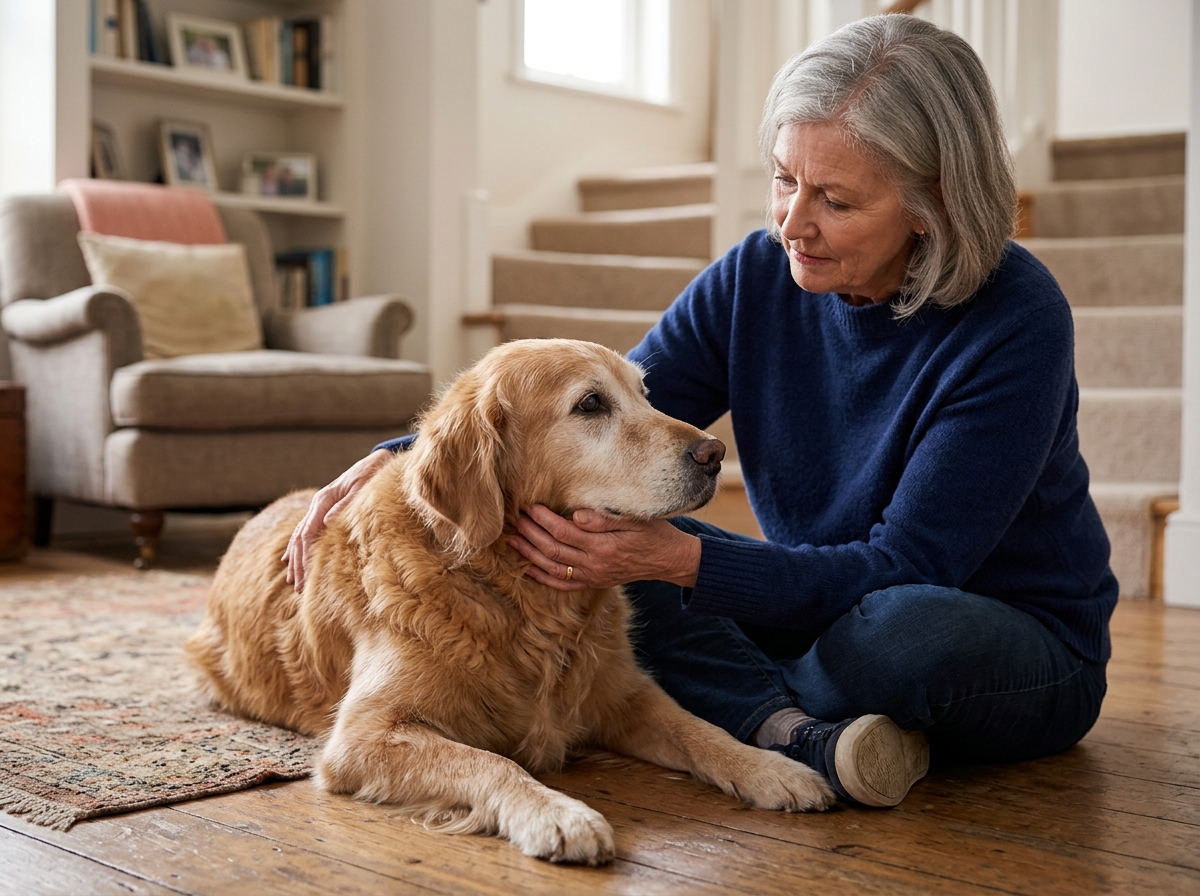
What that first pause on the stairs is really telling you - and why most owners don't understand it until years later
You noticed it last Tuesday.
Your dog paused at the bottom of the stairs. Just for a second. Then he went up like always.
You told yourself he was distracted. Or that he'd been running hard at the park earlier. Or that the hardwood was slippery. You probably didn't even mention it to your partner.
That small pause is the moment most owners of adult and senior dogs completely misread. Not because they don't love their dogs. But because they've been taught to look for the wrong thing.
They've been taught to look for the limp.
The limp is not the beginning. The limp is the middle.
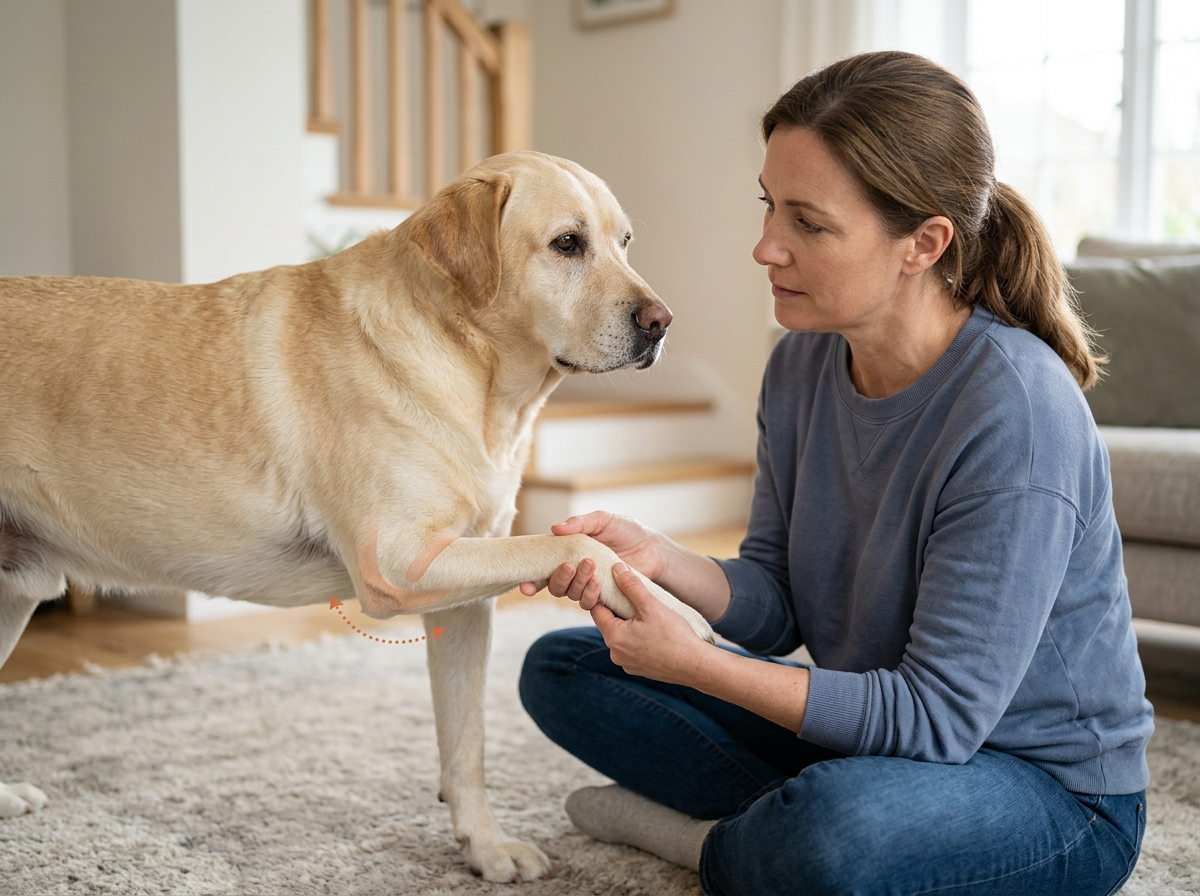
Dogs are wired to hide weakness. It's not stubbornness. It's biology.
Every dog living in your house right now, whether he's a 90-pound Shepherd or a 12-pound rescue mix, carries the same instinct his ancestors carried. In a pack, weakness gets you pushed out. So dogs mask discomfort. They compensate. They adapt their gait. They shorten their strides. They take stairs one at a time instead of two. They stop jumping onto the couch when you're not looking.
By the time a dog visibly limps, he has usually been managing that discomfort on his own for months. Sometimes years.
That period, the stretch between "he seems fine" and "something is clearly wrong," is what I've started calling the silent years.
And here's the part most owners never hear: the silent years are the single most important window in your dog's life. Because it's the only window where daily support is easy, cheap, and preventative instead of reactive.
The four-stage timeline nobody explained to you
I want you to see how the pattern usually plays out. Not to scare you. Just so you can recognize where your dog actually is on the map.
Stage 1 - The Silent Years. Your dog looks and acts normal. Runs, plays, eats, sleeps. Behind the scenes, cartilage is slowly thinning. Inflammatory signals are running a little hotter every year. Recovery from a hard play session takes slightly longer, but not enough for you to notice.
Stage 2 - The Small Changes. He hesitates at the base of the stairs. He takes an extra second to get up from his bed. His coat is a little duller than it used to be. He plays for 20 minutes instead of 30. You explain each one away individually because none of them, on their own, feel like a problem.
Stage 3 - Compensation. He shifts weight to his front end. He sits down mid-walk. He stops jumping into the car. He starts choosing the rug instead of the tile floor. You start adjusting the environment for him without realizing it.
Stage 4 - Visible Decline. Now there's a limp. Now there's a vet visit. Now there's a conversation about anti-inflammatories and imaging and "let's see how he responds."
Almost every owner I talk to enters the conversation at Stage 3 or 4. They think they're at the beginning. They're actually deep into a process that started years earlier.
Why "he's still fine" is the exact reason to start
Here's the thing about the silent years that catches people off guard.
The silent window isn't the wrong time to start a routine. It's the perfect time to start a routine. It's the only time you're supporting the body upstream of a problem instead of chasing one downstream.
When someone tells me, "My dog is still fine, I'll worry about supplements later," what they're really telling me is, "I'm going to wait until the easy window closes."
That's the trap. That's the miss.
Normal aging vs. a routine worth supporting
Let's separate two things people constantly confuse.
Normal aging is real. Every dog slows down eventually. You will not stop time and you will not turn a 12-year-old back into a puppy.
A routine worth supporting is different. A routine worth supporting is the daily inputs that keep the machine running smoothly for as long as biologically possible. Joint structure. Inflammation balance. Muscle and energy function. Immune readiness. Skin and coat integrity.
These aren't optional systems. They're the systems that determine whether your dog spends the next four years playing or spends the next four years being carefully managed.
The difference between those two futures is almost always what you did during the silent years.
Enter Pawprint Wellness Protocol
Pawprint Wellness Protocol is the daily liquid supplement designed for exactly this window. It replaces five or more separate supplements with one complete formula, delivered in a simple dropper, added to the food your dog already eats.
That's the whole reason it exists.
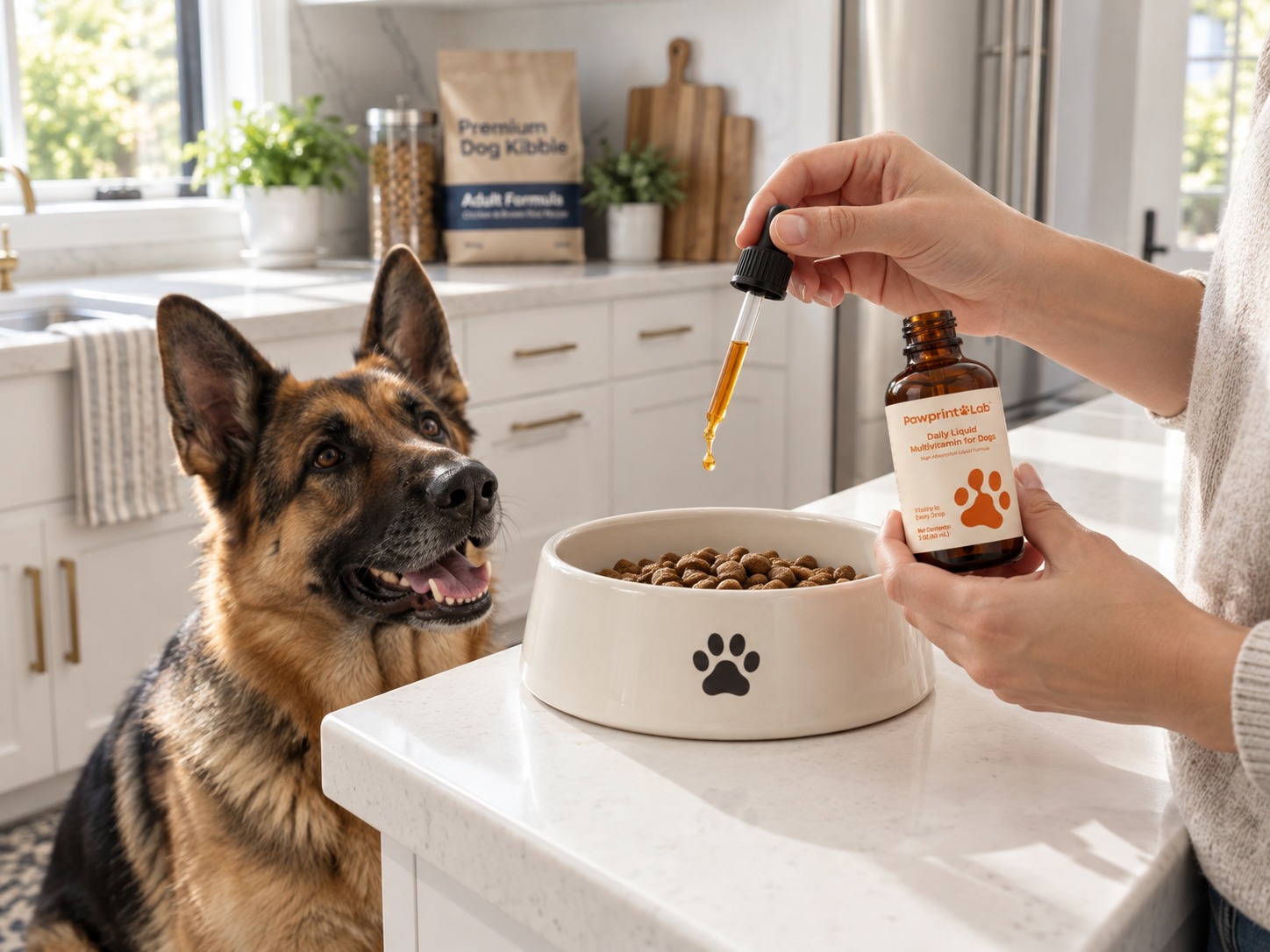
Most owners don't fail at supporting their dog because they don't care. They fail because the routine is a mess. A joint chew from one brand. A fish oil pump from another. A turmeric powder they mix in half the time and forget the other half. A multivitamin the dog spits out. By month two, the whole system collapses and the dog gets nothing.
Pawprint consolidates it. One bottle. One dropper. One habit.
What's actually in the bottle
Per 1 mL serving, you're delivering:
- Glucosamine HCl - 500 mg
- Chondroitin Sulfate - 250 mg
- MSM (Methylsulfonylmethane) - 200 mg
- Hyaluronic Acid - 25 mg
- Fish Oil - 300 mg (EPA 180 mg / DHA 120 mg)
- Beta-Glucans (β-1,3/1,6) - 100 mg
- Turmeric Extract (95% Curcumin) - 75 mg
- L-Carnitine - 100 mg
- Zinc (Amino Acid Chelate) - 15 mg
- Vitamin E - 25 IU / 16.75 mg
Here's how those work together, mapped to the silent years:
For joint structure and cushion: Glucosamine, chondroitin, MSM, and hyaluronic acid feed the cartilage and joint fluid your dog has been quietly wearing down since he was two.
For inflammation balance and easier recovery: Omega-3s (EPA/DHA), turmeric, and vitamin E help modulate the everyday inflammatory signaling that gets louder every year of your dog's life.
For steady energy, muscle function, and immune readiness: L-carnitine, zinc, and beta-glucans support the systems that keep your dog acting like himself - not just moving, but engaged.
No dairy. No dyes. No GMOs. Made in the USA under cGMP-compliant, 21 CFR Part 111 conditions.
Dose by size. No guesswork.
- Small (under 22 lb) - 1 dropper
- Medium (22-55 lb) - 2 droppers
- Large (55-88 lb) - 3 droppers
- Giant (88 lb+) - 4 droppers
Add it to food for higher absorption. That's it. No pill you have to hide in cheese. No powder that clumps at the bottom of the bowl. No chew he politely eats around.
The 90-day frame
Here's a rule I share with every owner who asks me how long they need to give it.
Ninety days.
Early changes often start showing up around week three or four. Easier mornings. A smoother stride. A coat that catches the light differently. But the real story is what happens by month three - longer play sessions, confidence on stairs, a dog who acts more like the version of himself you remember.
That's not a promise about any individual dog. Every dog is different. That's the honest consistency frame: three months of daily use is what lets the routine actually do its job.
The objections I hear most often
"My dog is still fine." Good. That means you're in the exact window this was built for. Starting a routine when your dog is fine is the easiest, cheapest, most effective thing you can do. Waiting until he's not fine flips the entire equation.
"Isn't this just fear marketing?" No. It's a timeline. Dogs hide weakness. The first visible sign is usually the middle of a longer process. That's not a scare tactic - that's how the biology works. What you do with that information is up to you.
"Why liquid instead of chews or pills?" Because the number one reason supplement routines fail is compliance. Liquid drops go straight into food, get absorbed efficiently, and eliminate the daily wrestling match. One bottle, one dropper, one habit.
What the offer looks like right now
- 30% off when you subscribe
- Free gifts included with subscription
- Free and fast shipping
- Made and shipped from the USA
- 100,000+ units sold
- 4.6 rating on Trustpilot
- Reviewed by Dr. Mark Saraiva, DVM
- 90-day money-back guarantee
You get 90 days to actually run the protocol. If it isn't right for your dog, you email the team within 90 days of delivery and you get your money back. That's how confident they are that the silent-years window is the right time to start.
You can also pause or cancel your subscription anytime.
The question that actually matters
Here's what I want you to sit with.
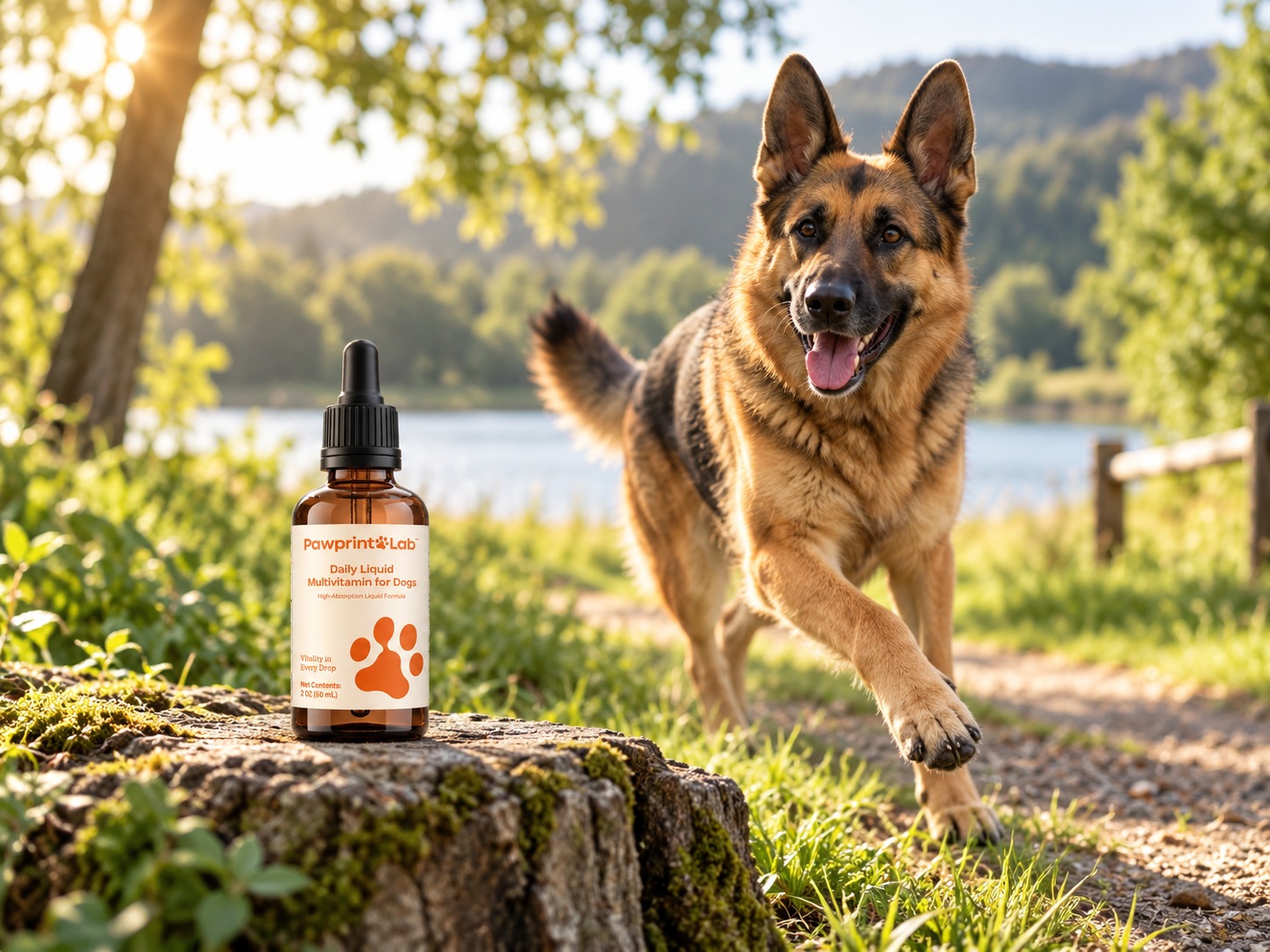
Five years from now, do you want to be the owner who started the protocol during the silent years and gave your dog every possible input to keep moving, playing, and showing up like himself?
Or do you want to be the owner who waited for the limp, and then spent the next several years reacting to something that had been building underneath the whole time?
There's no perfect moment. There's just the moment you're in right now, when your dog is still mostly fine, and the routine is still easy to start.
That's the window. That's the whole point.
*Pawprint Wellness Protocol is a daily nutritional supplement for dogs. It is not intended to diagnose, treat, cure, or prevent any disease. If your dog is showing signs of pain, mobility loss, or illness, consult your veterinarian.