
By Jordan Blake
Published Today
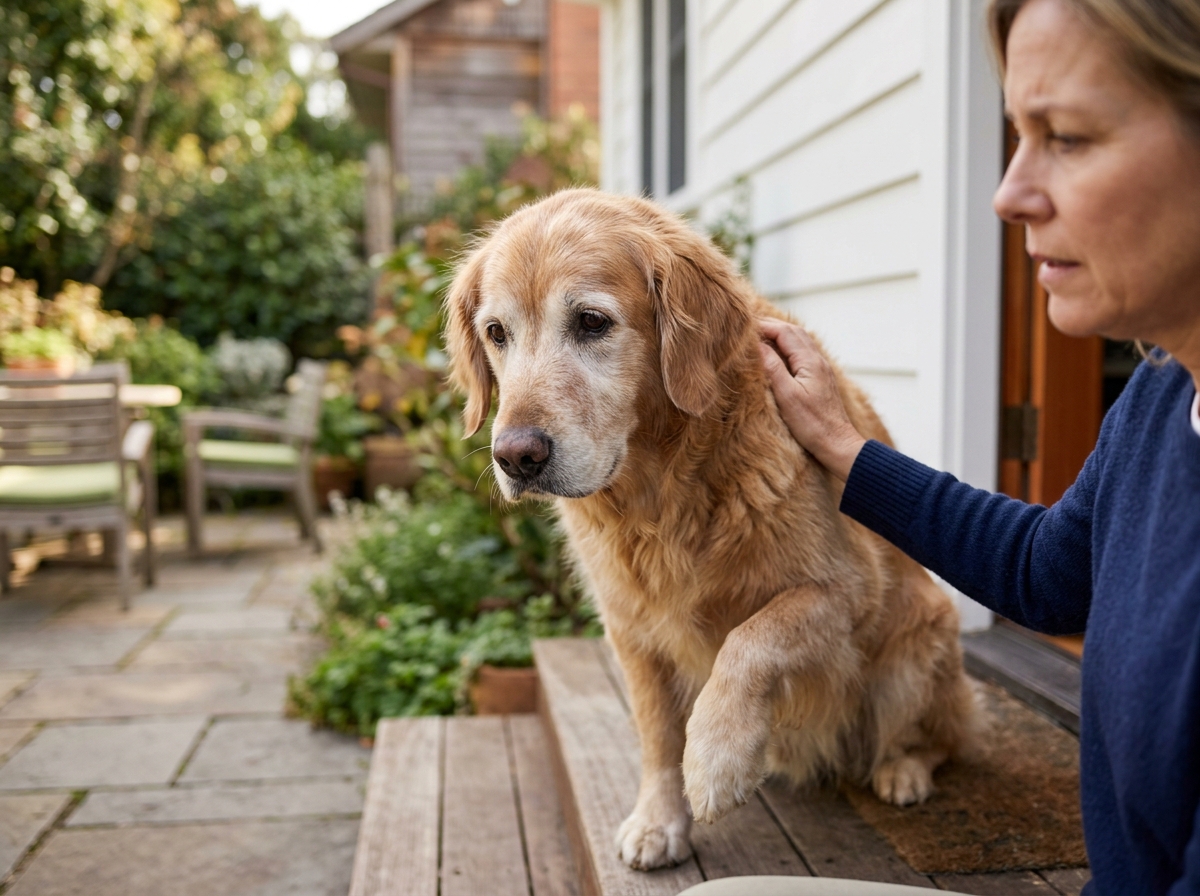
A veterinarian-reviewed look at the one pattern most dog owners misread - and the daily liquid routine quietly changing how 100,000+ owners protect their dog's joints.
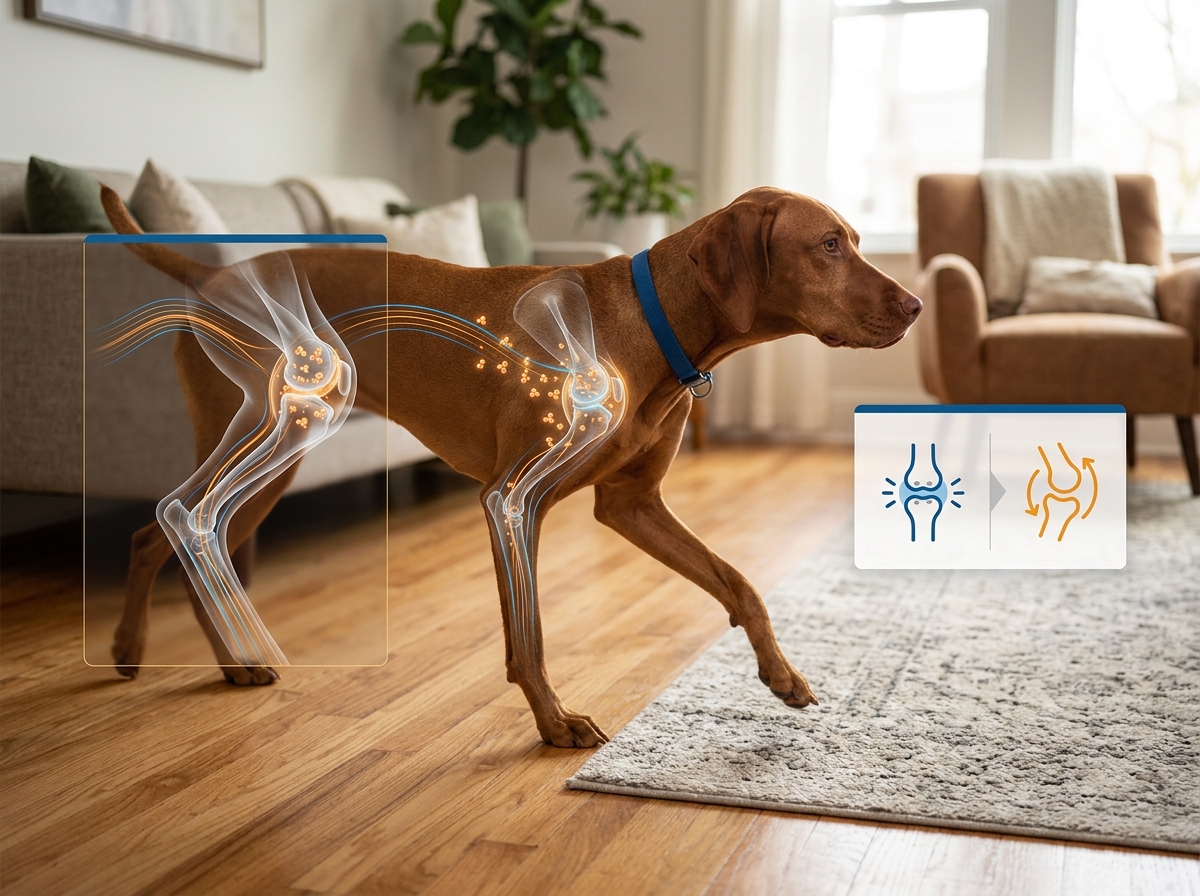
Last Monday my neighbor Karen texted me a video of her nine-year-old Lab, Baxter, launching himself off the couch and sprinting to the door like a two-year-old.
Her caption: "See? He's totally fine."
Two mornings later she sent another video. Same dog. This time Baxter was trying to stand up from his bed, back legs shaking, and he sank back down twice before he made it up.
Her caption this time was different: "Weird. Bad morning I guess."
Here's the thing that stopped me cold. Karen is a smart, attentive dog owner. She loves that dog like a child. And yet, without realizing it, she was doing something almost every owner of a middle-aged or senior dog does.
She was letting the good day cancel out the bad day.
And that single mental habit - completely understandable, completely human - is the reason so many dogs slide from "he has his days" into real, permanent joint damage before anyone acts.
If your dog has good days and bad days, please do not judge the trend from one good morning. Read the seven-day diary below. Then decide.
See the daily liquid formula 100,000+ owners are using >>>I asked Karen to do one thing. Just one. For seven days, at five moments in the day, write down what she saw.
The five moments:
That's it. No scoring. No diagnosis. Just observation.
Here is what her diary looked like.
Rising: bounced up. Stairs: took them two at a time. Walk: pulled on the leash. Turning: smooth. Play: brought her the rope toy unprompted.
Karen's note: "Perfect day. He's fine."
Rising: got up, but paused before taking the first step. Stairs: went up normally, came down one at a time. Walk: fine after a minute. Turning: slight hitch when turning left. Play: no play offered.
Karen's note: "A little slow but he's a senior now."
Rising: two attempts. Stairs: went down one at a time and stopped halfway. Walk: stiff for the first block. Turning: definitely favoring the right. Play: not interested.
Karen's note: "Off day. Maybe the weather."
Rising: BOUNCED up. Stairs: two at a time. Walk: normal. Turning: smooth. Play: brought the rope out on his own.
Karen's note: "See? He's totally fine. I was worrying about nothing."
Rising: paused, then rose slowly. Stairs: down one at a time. Walk: warmed up after two minutes. Turning: hitch on the left. Play: none.
Karen's note: "A little stiff."
Rising: three attempts, gave up, then made it. Stairs: refused to come down without coaxing. Walk: shortened by his choice. Turning: stopped and re-planned before turning. Play: none.
Karen's note: "Bad day. Must be his hips."
Rising: got up okay. Stairs: fine going up, one at a time going down. Walk: normal pace. Turning: one small hitch. Play: half-hearted.
Karen's note: "Okay day. Not bad."
Now step back and look at that week the way I did when she showed it to me.
Out of seven days, Baxter had two good days and five days with visible, escalating signs - pausing before rising, taking stairs one at a time, hitches on turns, refusing play.
But because two of those seven days were "totally fine," Karen was reassured for the whole week.
That, in one page, is the trap.
Support your dog's joints daily, not just on the stiff days >>>Here is what almost no one tells dog owners.
The brain is not neutral about the dog you love. When you see your dog bound off the couch and race to the door, your nervous system exhales. Everything you were quietly worrying about - the slow rise last week, the hesitation on the stairs - gets filed under "never mind, he's fine."
This is not weakness. This is love doing what love does.
The problem is that a joint under stress does not work the way your worry works.
A joint under stress does not need one good performance to prove it's healthy. It needs consistent daily support to stay healthy. And it produces inconsistent output for a very specific reason.
Inflammation is not constant. It rises and falls with activity, temperature, sleep, hydration, and the food eaten the day before. When inflammation is low - your dog looks great. When it flares - the same dog looks stiff, cautious, older.
Your dog is not inconsistent. The inflammation is.
That means the good day and the bad day are not two different dogs. They are the same joint, at two different points on the same curve. And every time that curve dips into "bad day," the cartilage takes a small hit that doesn't fully repair unless the raw materials are there.
This is why waiting for "he seems bad enough" is such a costly instinct. By the time the bad days outnumber the good days visibly, the joint has already been losing structural cushion for months, sometimes years.
The seven-day pattern is the earliest, cleanest signal you'll ever get. It shows up long before your vet has anything to point at on an exam.
Start supporting the joint before the trend tips >>>Once you accept that the pattern is the signal, the intervention becomes obvious.
You need two things happening in the dog's body every single day:
1. Raw materials for the joint structure itself.
That's glucosamine, chondroitin, MSM, and hyaluronic acid. These feed cartilage and the cushioning fluid inside the joint. Without them, the joint has nothing to rebuild with after a bad day.
2. Balance for the daily inflammatory signal.
That's EPA and DHA from fish oil, turmeric, and vitamin E. These help settle the everyday inflammatory noise that turns a healthy joint into a stiff one overnight.
Neither one works on its own. Joint-building ingredients without inflammation support means you're feeding cartilage that keeps getting inflamed. Inflammation support without joint materials means you're quieting the pain without repairing the structure.
The dogs who do best long-term get both. Every day. Not just on the stiff days.
Which is exactly why I want to walk you through what Karen ended up using, and why her vet was fine with it.
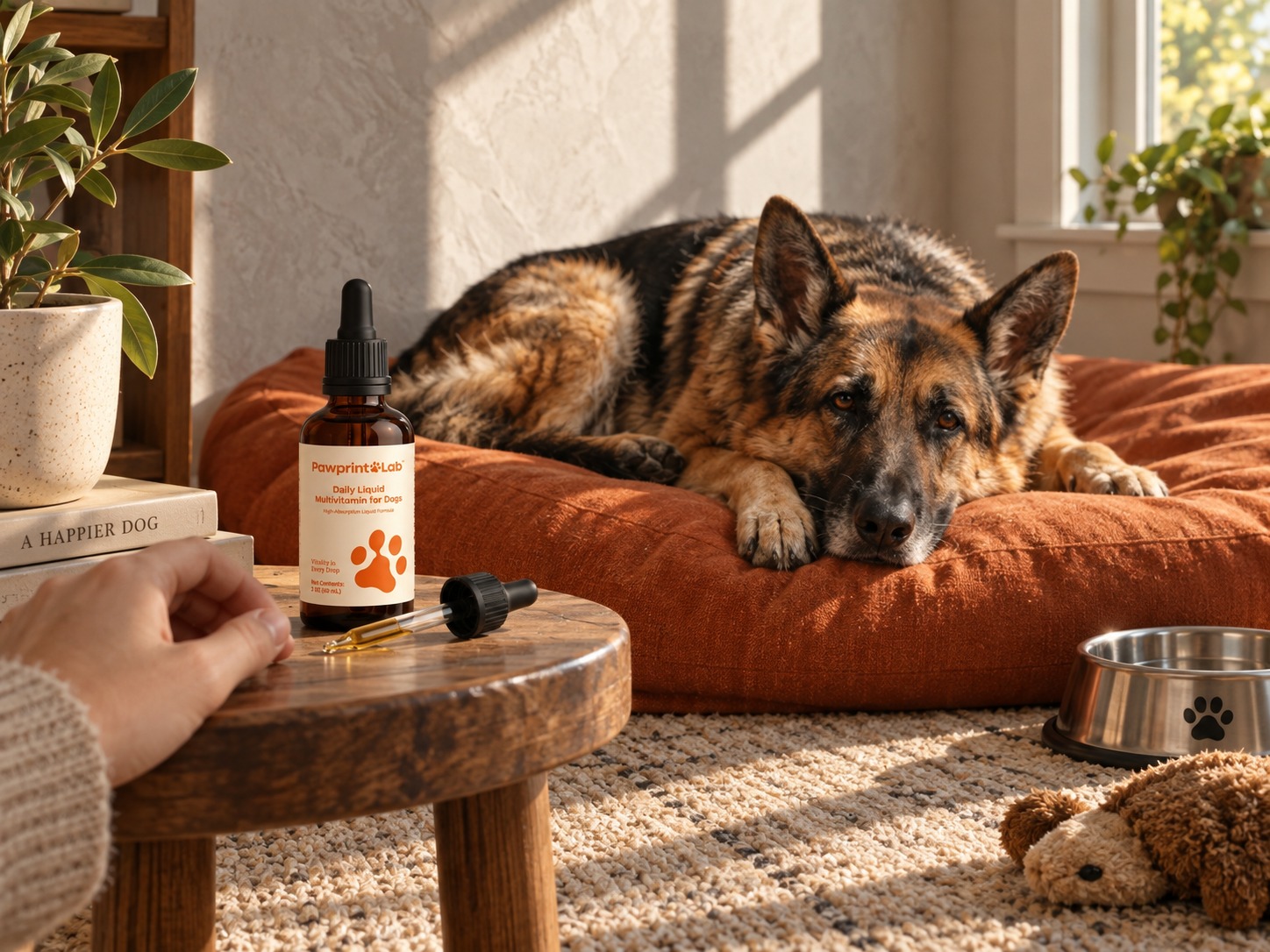
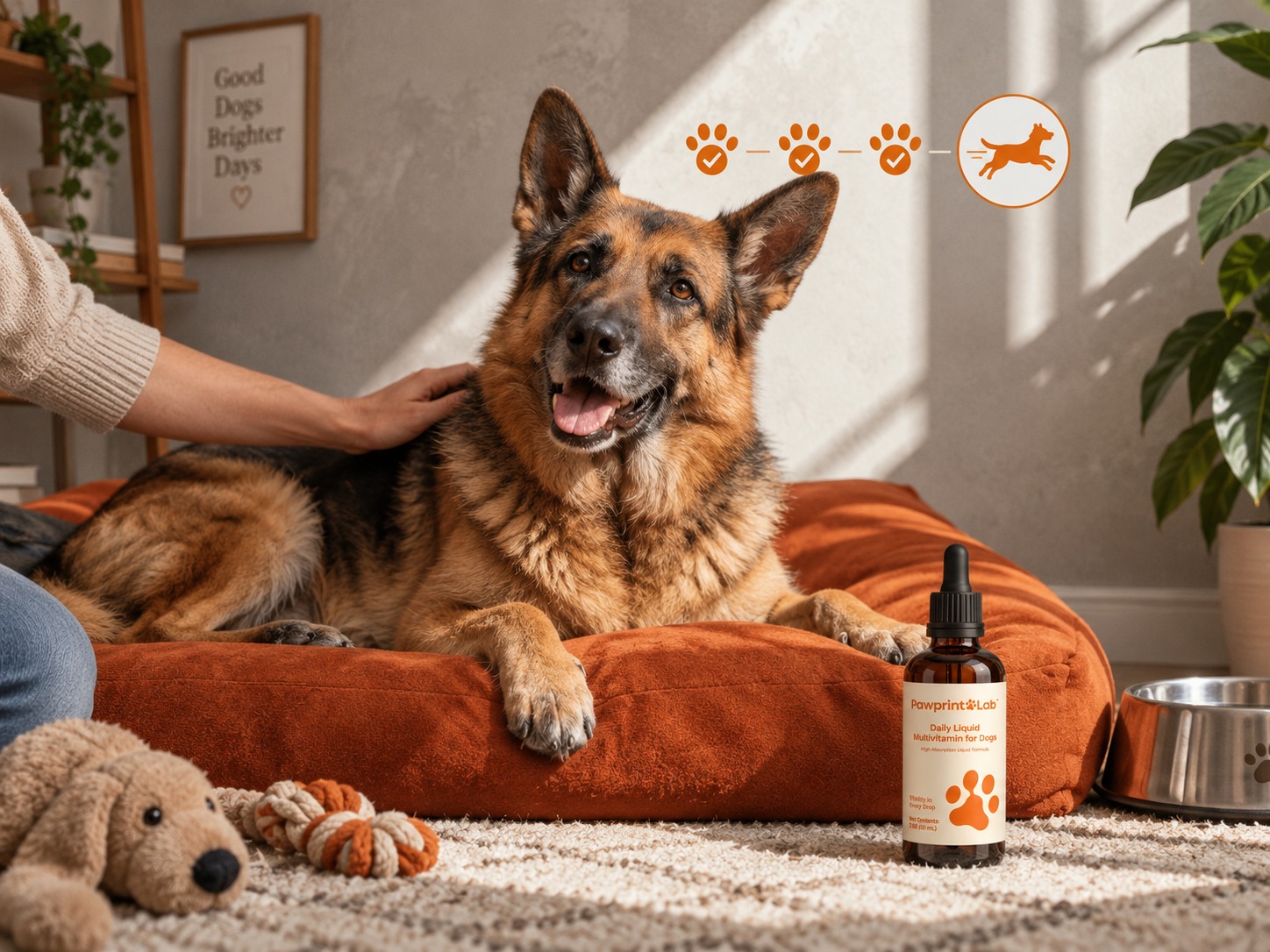
Pawprint Wellness Protocol is a daily liquid drop supplement for dogs, made by Pawprint Lab. It's reviewed by Dr. Mark Saraiva, DVM, and it was built specifically to solve the "I don't want to give my dog five different pills" problem.
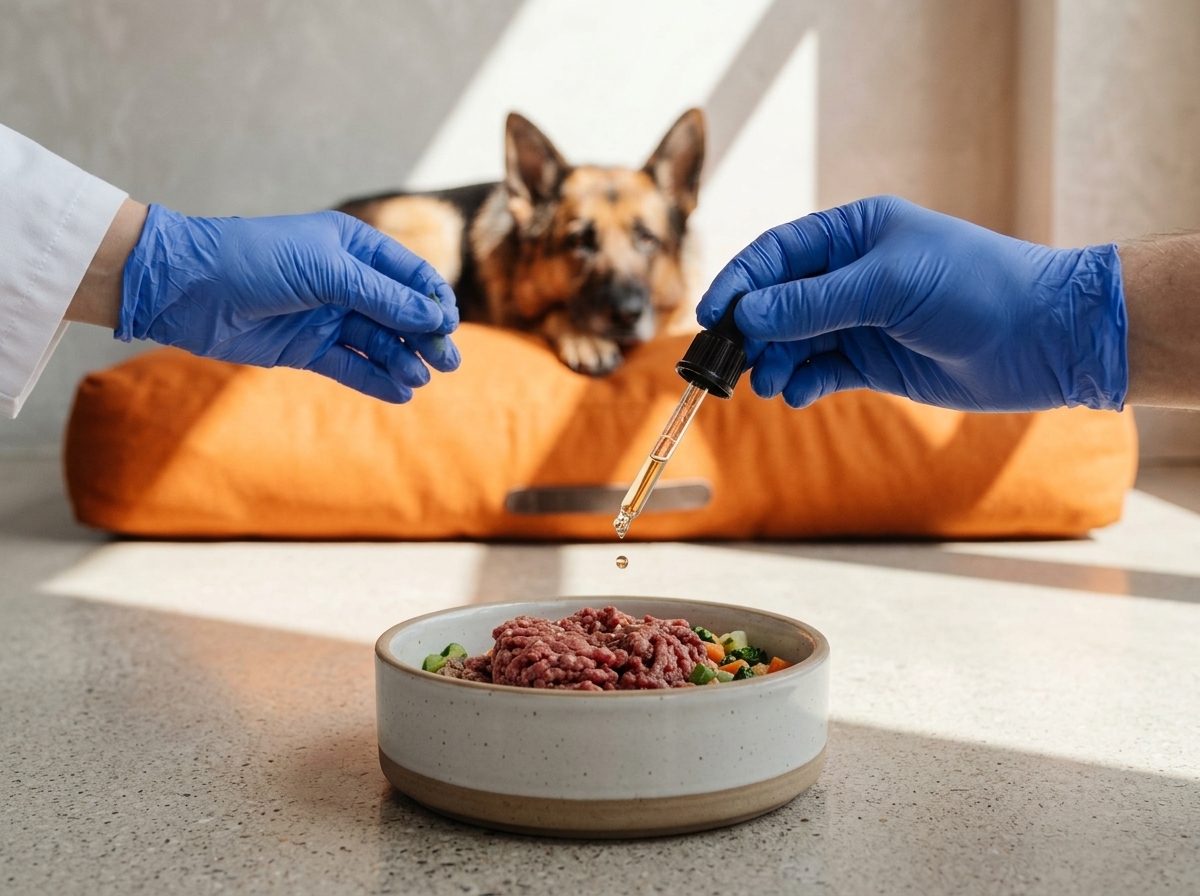
One bottle. 2 fl oz / 60 mL. Weight-based dosing with a marked dropper. Add it to food or give it directly.
Here is what's inside every 1 mL:
That's the full joint-and-inflammation stack in a single dropper. No dairy, no dyes, no GMOs. Made in the USA in a cGMP-compliant facility under 21 CFR Part 111 standards.
It's designed to support five areas at once:
That's why the tagline is "The Complete Daily Formula That Replaces 5+ Supplements Your Dog Won't Take." Because most owners either can't get their dog to swallow five different chews, or they give up trying and just do a joint chew and hope for the best.
See the full ingredient panel and dosing chart >>>One of the reasons owners quit supplements is they can't remember how much to give. Pawprint solved that with a dropper and four categories.
Give with food for higher absorption. That's it.
No chews the dog spits out. No powders that clump on top of kibble. No pill-in-a-cheese-cube routine at 6 AM.
You put drops on the food. The dog eats. You're done.
Every dog is different, but consistency is what moves the needle. Pawprint has mapped out the general arc most owners see, because owners keep asking "how long until I know?"
Progress builds with daily use. This is not a switch you flip. It's a curve you bend, one day at a time, by giving the joint what it needs before the next bad day arrives.
That's why Pawprint recommends a minimum 90-day run, and why the guarantee is structured the way it is (more on that below).
Give your dog 90 days of daily support >>>"He's fine today."
That's exactly the reflex the seven-day diary is designed to expose. One good day is not the trend. The trend is what matters.
"It's probably just the weather."
Weather can amplify a bad day. It does not create the underlying degeneration. The pattern is about what's happening between the weather events.
"I already give him a joint chew."
Most joint chews cover glucosamine and chondroitin. They don't stack MSM, HA, EPA/DHA, turmeric, and vitamin E in one daily dose. That's the difference between feeding the cartilage and also calming the daily inflammatory noise that's tearing it up.
"He hates supplements."
That's why it's liquid drops on the food. Not a pill. Not a chew. Not a powder.
Pawprint Wellness Protocol is only available at pawprintlab.com. It's not sold on Amazon.
The Subscribe & Save pricing (30% off) works out to:
One-time purchase is also available. Subscription comes with free shipping and you can cancel or pause anytime.
Every order is backed by a 90-day money-back guarantee. That's not a marketing line. That's a full three-month window - the same window most owners need to see the trend actually change. If it doesn't work for your dog, you email them within 90 days of delivery. Done.
Add in 4.6 on Trustpilot across 129 reviews, 100,000+ units sold, and DVM review by Dr. Mark Saraiva - and this is about as low-risk as a daily supplement decision gets.
Start the 90-day protocol and lock in 30% off >>>Before you do anything, do this. It costs nothing and it will change how you see your dog.
For the next seven days, at five moments each day, write down what you see:
At the end of seven days, count the "good" days and the "bad" days.
If you see a pattern that looks anything like Baxter's - if the bad days outnumber the good days, or if the bad days are getting subtly worse over time - you now have your answer.
The trend is the truth. One good morning is not.
Give the joint what it needs, every day, before the next bad day arrives.
Get the daily liquid formula 100,000+ owners trust >>>Pawprint Wellness Protocol is a daily liquid supplement for dogs. Reviewed by Dr. Mark Saraiva, DVM. Made in the USA in a cGMP-compliant facility. 90-day money-back guarantee. Not sold on Amazon. Available only at pawprintlab.com.


