

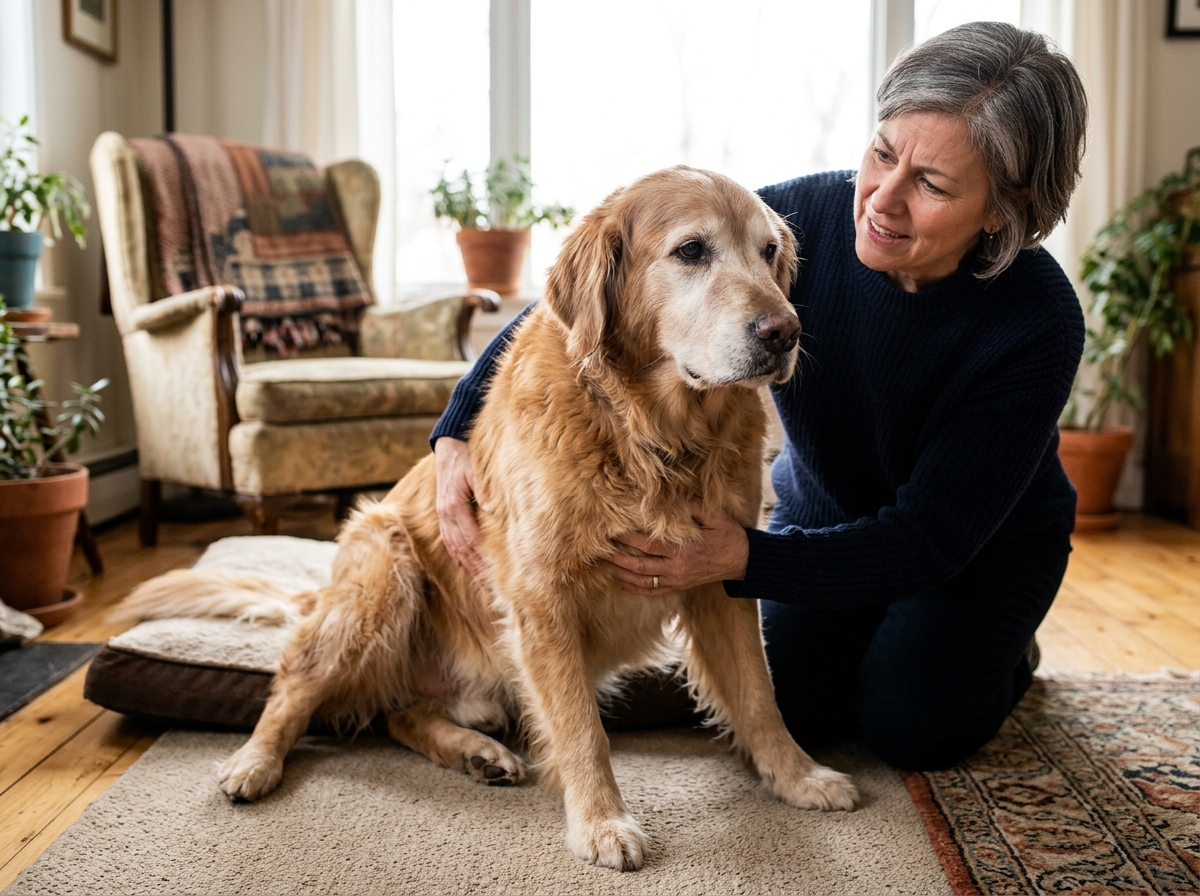
You know the exact moment I'm talking about.
Your dog is lying on their bed. You grab the leash, jingle the keys, or just walk toward the kitchen. Their head lifts. Their eyes light up. They want to get up.
And then… they don't. Not right away.
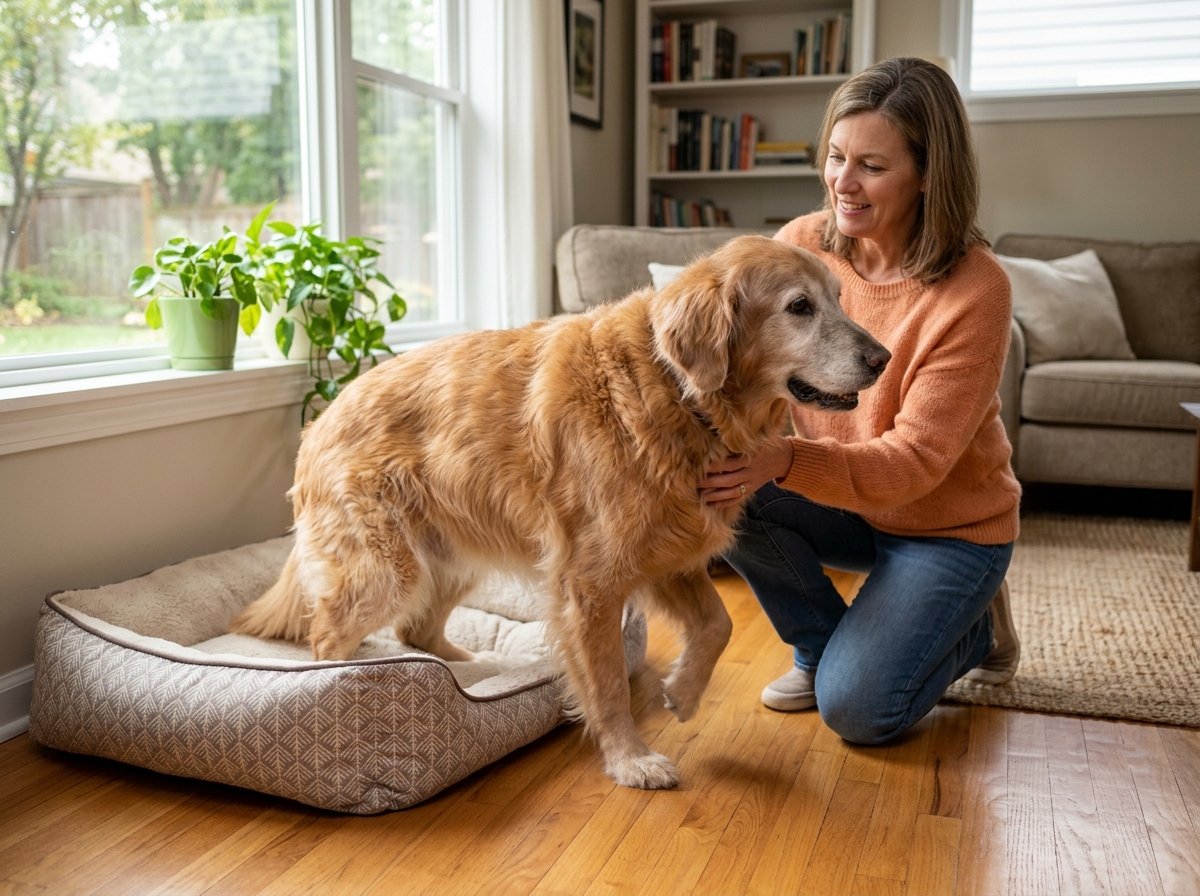
The front legs plant. The back end lags. There's a small rock forward, a pause, another push, and finally - after two or three tries - they're standing. They shake it off. They trot over like nothing happened.
But something did happen. And if you're like most owners of dogs over the age of seven, you already have an explanation locked in:
"It's the hips."
That's the story every senior-dog owner has been trained to tell. It's the story pet stores tell. It's the story most joint chews are built around. And it's the story that sends millions of owners to the same shelf, buying the same hip-focused supplement, expecting a different result.
Here's what I want you to consider today, based on observations shared in the veterinary community and the source material behind this article: the hips may not be the whole story. In fact, for a lot of senior dogs, the hips aren't even the most overlooked part of that slow, rocking sit-to-stand.
There's another region of your dog's body that almost nobody thinks about. And once you learn where to look, you'll start noticing it in your own dog within the next 24 hours.
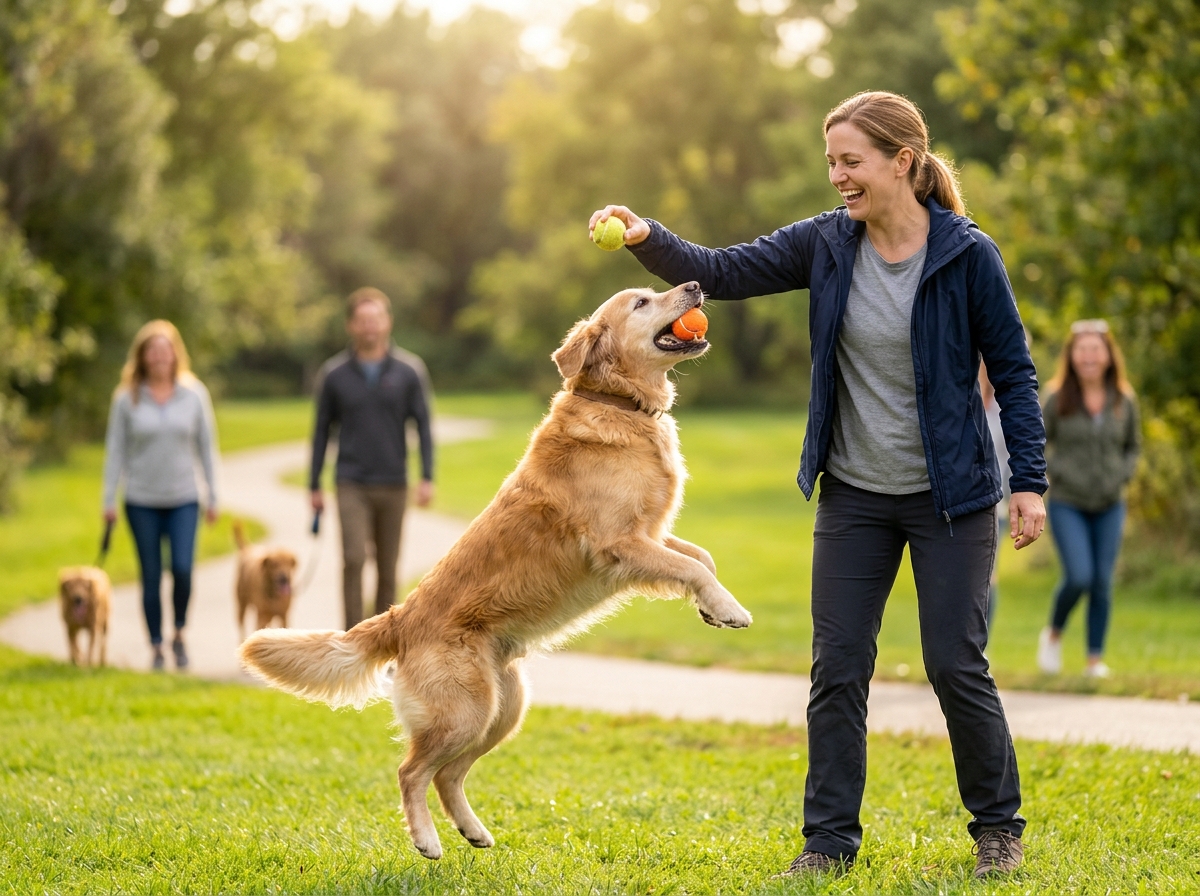
 See the whole-movement protocol Dr. Mark reviewed →
Run your hand from the base of your dog's neck, down the spine, all the way to the base of the tail.
Somewhere in the back third - just before the hips - you'll pass over the lumbar spine.
That stretch of vertebrae is doing an enormous amount of work every time your dog:
The hips are the joint everyone names. But the lumbar spine, the muscles bracing it, and the low-grade inflammation running through the surrounding tissue are the quiet part of the movement. When they get stiff, your dog doesn't yelp. They just… move a little differently.
They rock instead of rise.
They circle a little more before lying down.
They pause at the bottom of the stairs.
They stop turning their whole body and start swinging just their head.
According to the veterinary source cited in the brief behind this article (a YouTube discussion on managing arthritis in dogs), the lumbar region is one of the most commonly overlooked contributors to slow sit-to-stand movement in seniors. Owners see the back end lagging and assume "hips." Sometimes that's right. Often it's incomplete.
This isn't about contradicting your vet. If your vet has diagnosed a hip condition, that diagnosis stands. What we're doing here is widening the frame - because a hip-only supplement, by definition, only supports a hip.
Your dog moves as one system.
Before we talk about what to do, spend the next few days watching your dog through this lens. You don't need any equipment. Just your eyes.
1. Rising from lying down.
Does the front end come up first, then a rock, then the back end? How many "tries" does it take? A young dog gets up in one fluid motion. A dog with a stiff lumbar region and inflamed supporting tissue will use momentum instead of muscle.
2. Turning around.
Watch what turns first - the head, or the whole body. Dogs with stiffness in the lower back often "swivel" the neck to look behind them instead of pivoting the hips and spine together.
3. Stairs.
Not just "can they do them" - watch how. Are they hopping both back legs together instead of alternating? Are they pausing at the bottom to gather themselves?
4. Getting into the car.
The jump into an SUV is a full-body test. The load goes through the lumbar spine on the launch and again on the landing. Reluctance here is a movement signal, not a personality change.
5. Lying back down.
This is the one owners miss most. A dog with a comfortable back drops smoothly. A dog whose whole system is fighting inflammation will circle three, four, five times, then lower one end at a time, sometimes with a small groan at the finish.
Any one of these on its own doesn't mean much. Two or three of them together? That's your dog telling you the movement system needs support - not just the hip.
Learn how the Wellness Protocol supports the whole movement system →Walk into any pet store and the joint aisle looks identical. Chews. Chews. More chews. Almost all of them built around one story: glucosamine for the hip.
Glucosamine matters. So does chondroitin. So does MSM and hyaluronic acid. These are legitimate building blocks for cartilage and joint cushion.
But here's what a hip-only chew doesn't do:
And most owners don't just buy one chew. They buy a joint chew. Then a fish oil. Then a turmeric. Then a probiotic. Then a multivitamin. Five bottles on the counter. Five different flavors. Five different textures your dog decides they hate this week.
That's the problem the Pawprint Wellness Protocol was built to solve.
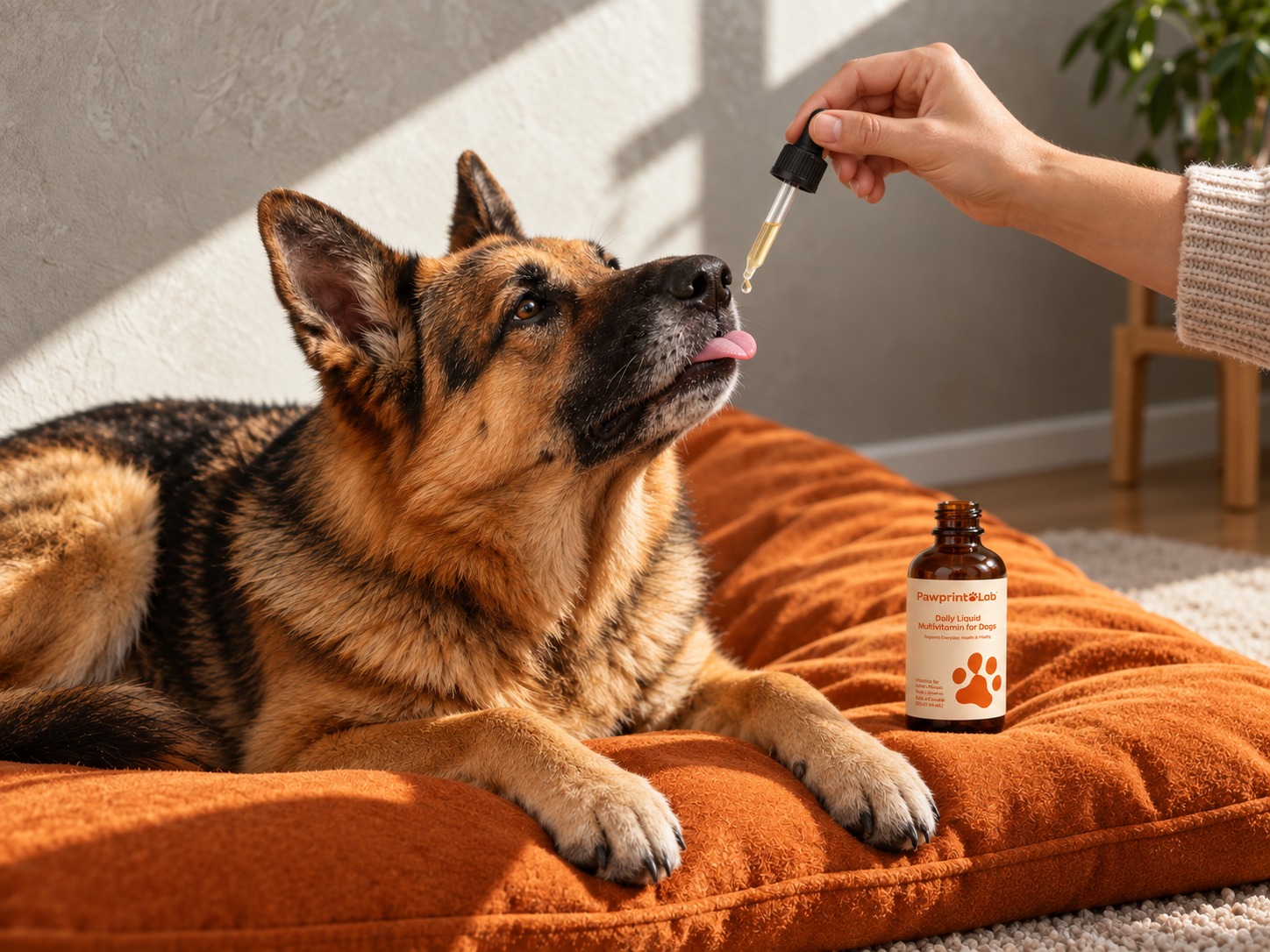
Pawprint Wellness Protocol is a daily liquid drop supplement for dogs. One bottle. One dropper. Added to the food your dog already eats.
It's designed to replace 5+ separate supplements and support five areas of everyday canine health:
The formula was reviewed by Dr. Mark Saraiva, DVM. It carries a 4.6 Trustpilot rating from 129 reviews, and Pawprint Lab reports 100,000+ units sold across their protocols.
Here's why the liquid format matters for the whole-movement conversation: a chew forces one bite, one flavor, one texture. A liquid drop lets you deliver a complete stack - joint builders, omega-3s, turmeric, muscle-energy support, immune support - in one dose, mixed into food your dog is already excited about.
That's how a daily habit actually sticks.
Start the 90-day whole-movement routine →Every 1 mL serving of Pawprint Wellness Protocol delivers:
Inactive ingredients: purified water, natural flavors, vegetable glycerin, citric acid, potassium sorbate. No dairy, no dyes, no GMOs. (Note the shellfish sensitivity caveat, since the glucosamine is shellfish-derived.)
Read that list against the "hip only" frame and it's obvious what's happening: this isn't a hip supplement. It's a whole-movement daily.
That's the bridge between "the hip" and everything else that has to work for your dog to rise, turn, climb, and lie back down without a struggle.
Made in the USA in a cGMP-compliant facility under 21 CFR Part 111 standards. Ships from a US warehouse.
One of the reasons owners abandon supplements is that dosing is a mystery. Pawprint solves that with a weight-based dropper chart:
Give with food for higher absorption. That's it. No pill-hiding routine. No powder your dog leaves at the bottom of the bowl.
One bottle (2 fl oz / 60 mL) lasts roughly 60 days at 1 mL/day, 30 days at 2 mL/day, 20 days at 3 mL/day, or 15 days at 4 mL/day depending on your dog's size.
Progress builds with daily use, and every dog is different. But here's the observation timeline Pawprint shares based on their in-house guidance:
The whole point of a 90-day window is that the movement system doesn't rebuild in a weekend. Cartilage, inflammatory signaling, muscle energy, coat quality - these are daily-consistency stories.
That's why the guarantee is what it is (more on that below).
Begin your dog's 90-day routine today →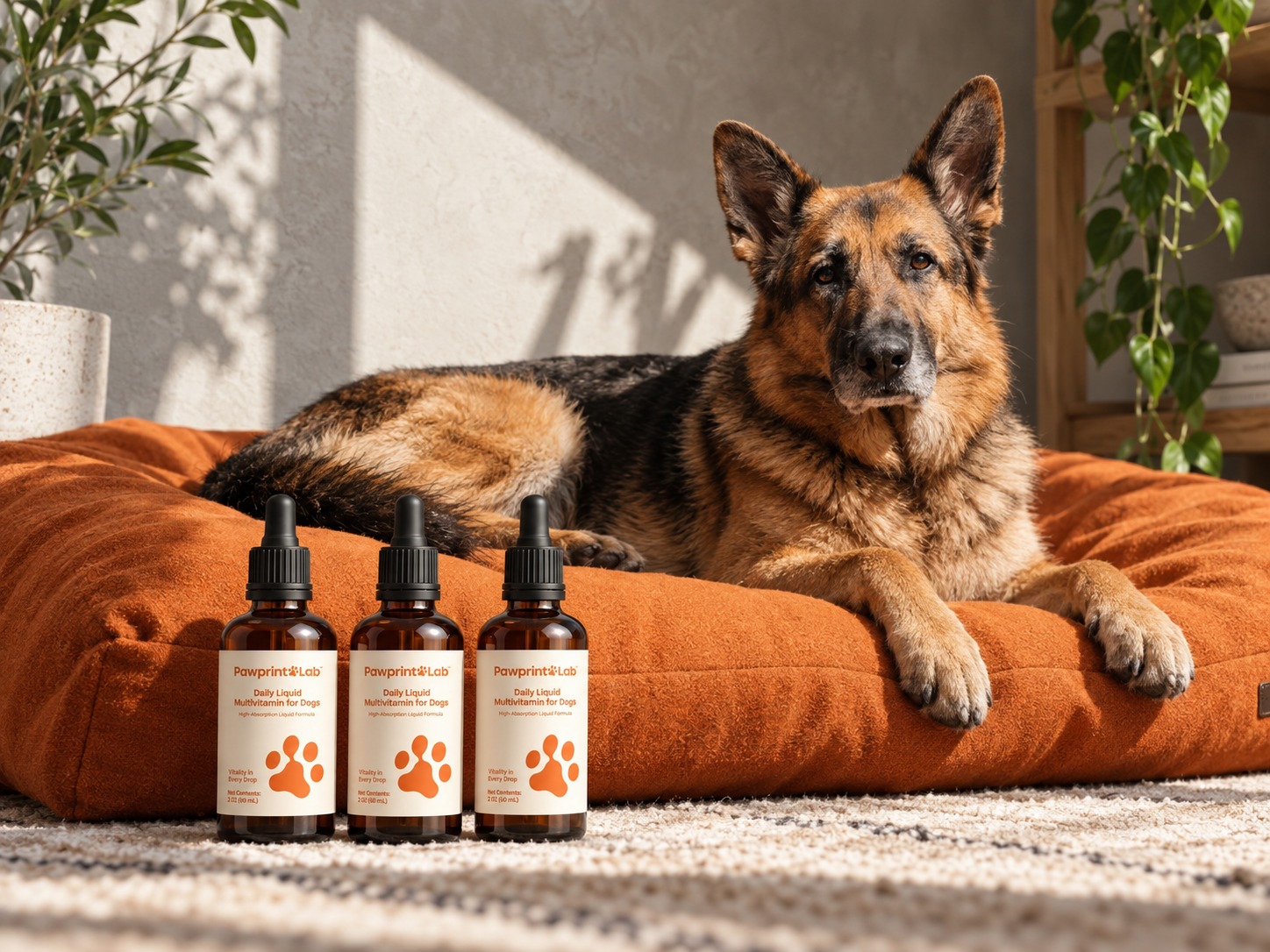
Pawprint Wellness Protocol is available as a one-time purchase or on Subscribe & Save.
With Subscribe & Save 30% off:
Free shipping on subscription orders. Pause or cancel anytime. Free gifts included on multi-bottle bundles.
Made and shipped from the USA.
You have a full 90 days to try the Pawprint Wellness Protocol with your dog.
That's not a marketing throwaway. That's a deliberate window - long enough to run the full observation timeline: easier mornings in month one, longer play in month two, restored routine in month three.
If you don't see the whole-movement difference in your dog, you get your money back. Pawprint reports that fewer than 1% of customers request a refund.
"My vet already said it's the hips. Does this contradict that?"
No. A veterinary diagnosis stands. Pawprint Wellness Protocol isn't a treatment or a diagnosis. It's daily nutritional support for the whole movement system - joints, inflammatory balance, muscle energy, immune health, and skin & coat. Whole-system support matters even when one specific joint is the named issue.
"Is this a pain medication?"
No. It's a daily nutritional supplement. It's built to support the systems your dog uses every time they rise, turn, climb, or lie down. Anything involving pain or a specific medical condition is a conversation for your veterinarian.
"Why liquid instead of a chew?"
Because your dog's movement isn't a single-joint problem, and a chew is usually built around a single-flavor, single-ingredient story. A liquid dropper delivers a complete stack - joint builders, omega-3s, turmeric, muscle-energy support, immune support - in one dose, mixed straight into the food your dog already eats. It also solves the "my dog won't take pills" problem instantly.
"What if my dog has a shellfish sensitivity?"
The glucosamine in the formula is shellfish-derived, so this is one to flag with your vet before starting.
"How fast will I see something?"
Owners typically report easier mornings and smoother strides through month one, with the fuller "restored routine" picture arriving through months two and three. Daily consistency is the whole game.
Here's the shift I want you to walk away with.
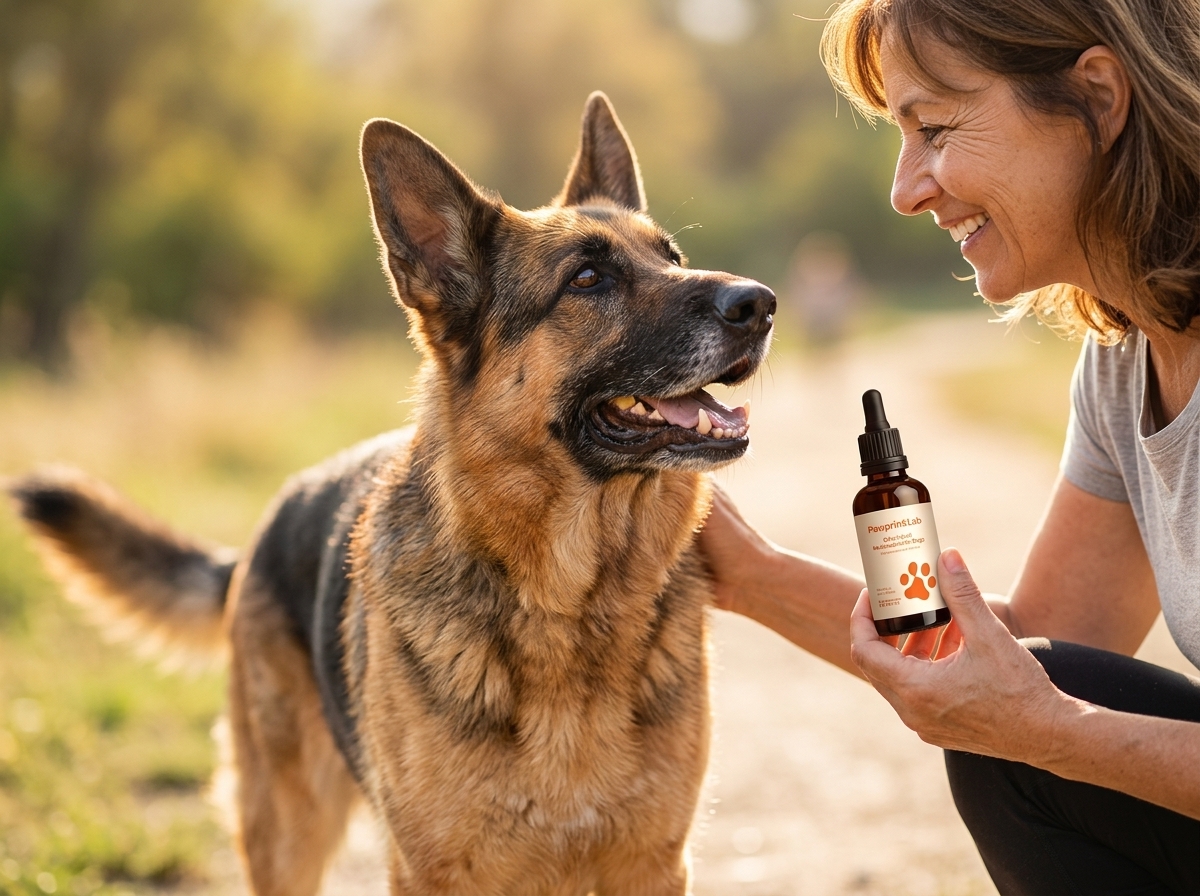
The next time your dog rocks up off the bed, don't just look at the hips. Look at the whole rise. Watch the lower back. Watch the turn. Watch the lie-down. Watch the stairs. Watch the car.
Then ask the honest question: am I supporting the whole movement system, or just one named joint?
If the answer is "just one," the Pawprint Wellness Protocol is the daily liquid that closes the gap - one dropper, one bottle, five areas of support, added to tonight's dinner.
Reviewed by Dr. Mark Saraiva, DVM. 4.6 on Trustpilot from 129 reviews. 100,000+ units sold. Made in the USA. 90-day money-back guarantee.
Your dog doesn't need another chew.
They need the whole picture, every day.
*Pawprint Wellness Protocol is a daily nutritional supplement. It is not a diagnosis, treatment, cure, or replacement for veterinary care. Always consult your veterinarian about your dog's specific health needs.


